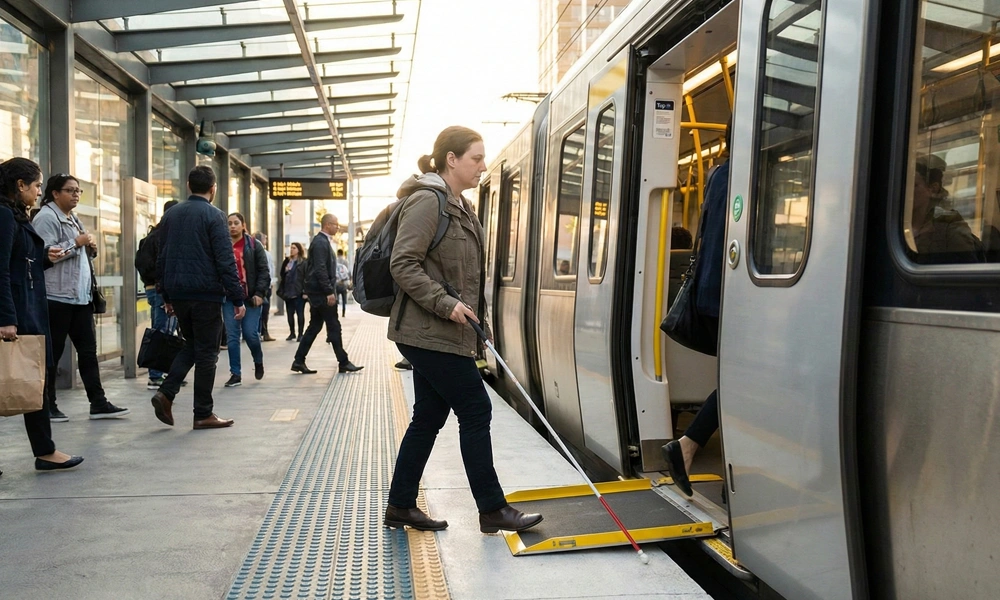
Australia is a traveller’s paradise – from tropical rainforests and coral reefs to red desert landscapes, cosmopolitan cities, and rugged coastlines. Vision impairment doesn’t disqualify you from exploring this diverse country. Yes, travel requires extra planning and consideration, but the experiences, memories, and sense of adventure are absolutely worth the effort.
This guide covers everything from planning accessible holidays to navigating airports, choosing accommodations, and exploring Australia’s incredible destinations with confidence.
The Planning Stage
Successful travel begins months before departure. Unlike spontaneous weekend getaways, accessible travel requires research, communication, and preparation.
Choosing Destinations
Start by honestly assessing what type of travel you enjoy and what’s realistic for your capabilities. A bustling city break in Sydney or Melbourne offers different challenges and rewards than a quiet coastal retreat or outback adventure.
Consider:
- How comfortable are you navigating unfamiliar environments?
- Do you prefer structured tours or independent exploration?
- What level of physical activity do you enjoy?
- Do you need regular access to support services?
- What’s your budget for accessibility accommodations?
There’s no wrong answer – just honest self-assessment that ensures you choose trips you’ll genuinely enjoy rather than endure.
Research and Resources
Tourism Australia provides accessibility information for major attractions and destinations. Many state tourism websites include accessibility guides highlighting suitable venues, accommodations, and activities.
Join online communities of vision-impaired travellers. Facebook groups and forums provide real-world advice from people who’ve actually visited destinations you’re considering. Their experiences often reveal details official websites miss.
Contact destination visitor centres before booking anything. Ask specific questions about accessibility, available support, and vision-impaired friendly attractions. Staff can provide invaluable local knowledge.
Booking Accommodations
Accommodation choice significantly impacts your travel experience. You’ll spend considerable time there, and it becomes your base for orientation and rest.
Hotels vs Apartments vs Other Options
Hotels offer structure and support – 24-hour reception, staff assistance, room service, and consistent layouts across rooms. This predictability helps with orientation and provides ready assistance when needed.
However, hotels can be vast and confusing. Large resorts with multiple buildings, wings, and levels present navigation challenges. Request rooms near lifts, with clear routes to reception and dining areas.
Serviced apartments or Airbnbs provide more independence but less support. You’re responsible for all your own navigation and problem-solving. The trade-off is often better value, kitchen facilities, and more space.
For vision-impaired travellers, I’d generally recommend hotels for first-time destinations and apartments for places you’re more familiar with or when travelling with companions who can assist with initial orientation.
Communicating Your Needs
When booking accommodation, communicate clearly about your requirements:
- Ground floor or lift access
- Room near lifts/reception
- Good lighting or specific light preferences
- Clear pathways without obstacles
- Assistance with luggage and orientation
Most Australian hotels are required under disability discrimination laws to provide reasonable accommodations. Don’t be shy about requesting what you need.
Room Layout
Upon arrival, request a thorough room orientation from staff. Have them describe:
- Bathroom layout and controls
- Light switches and controls
- Furniture placement
- Minibar, safe, and other features
- Emergency exits and procedures
- Room service and contact numbers
Take time to physically explore the room yourself after this verbal orientation. Use your hands to map furniture placement, test all switches and controls, and establish a mental layout.
Keep your room consistently organized. Designate specific spots for keys, phone, wallet, and other essentials. This prevents frantic searching when you’re ready to head out exploring.
Air Travel
Flying opens up the entire country (and beyond), but airports and aircraft present unique accessibility challenges.
Booking Flights
When booking, register your accessibility requirements:
- Vision impairment requiring assistance
- Guide dog travel (if applicable)
- Preference for aisle seats near the front
- Any specific needs
Australian airlines including Qantas, Virgin Australia, Jetstar, and Rex all have accessibility services. Contact them directly rather than booking through third-party sites, which may not properly record your needs.
Many vision-impaired travellers prefer direct flights to avoid the complexity of changing planes and navigating unfamiliar airports during connections.
Airport Navigation
Arrive at airports early – at least 90 minutes for domestic flights, 3 hours for international. This buffer accommodates the extra time accessibility services require.
Upon arrival, head to your airline’s service desk and identify yourself as requiring assistance. Airlines provide escort services from check-in through security, to the gate, and onto the aircraft. This service is free and your right.
Don’t attempt to navigate large airports independently on your first visit. The time pressure, crowds, and confusing layouts create unnecessary stress. Accept the assistance – it’s what the service exists for.
Security Screening
Inform security staff you’re vision-impaired before screening. They’ll provide verbal guidance through metal detectors and explain any additional screening required.
If you use a white cane, it will go through x-ray screening but will be returned before you move through the security area. Guide dogs walk through metal detectors with you.
Security can be stressful with the noise, crowds, and time pressure. Stay calm, follow instructions, and don’t hesitate to ask for clarification if you’re unsure what’s expected.
Boarding and In-Flight
Pre-boarding is available for passengers requiring assistance. You’ll board before general passengers, giving you time to settle in and stow belongings without crowds pressing behind you.
Flight attendants should provide a safety briefing covering your row’s emergency exits. If they don’t, request this information – it’s critical safety information you can’t access visually.
During flights, don’t hesitate to request assistance finding the bathroom, locating overhead bins, or managing meal service. Flight attendants are trained to assist passengers with disabilities.
Arriving at Your Destination
Upon landing, wait for an airline staff member to escort you through the terminal to baggage claim and onward transport. Don’t try to follow crowds independently in an unfamiliar airport.
If you’re being met by someone, communicate meeting points clearly beforehand. “I’ll be escorted to the arrivals area – look for me near the [airline] service desk” is clearer than “meet me at arrivals.”
Ground Transport at Destinations
Once you’ve reached your destination, getting around presents daily challenges.
Taxis and Rideshare
Taxis and rideshare services (Uber, DiDi) provide flexible transport without requiring you to navigate unfamiliar public transport.
When booking rideshare:
- Use the app’s accessibility features
- Put your pickup location somewhere staff can direct you (hotel entrance, specific landmark)
- Include in your profile that you’re vision-impaired
- Message drivers to confirm pickup location
Guide dogs are legally entitled to travel in all taxis and rideshares in Australia, though some drivers are unfortunately unaware of this. If a driver refuses, report them immediately to the company.
Tours and Tour Groups
Organized tours solve many navigation challenges. Someone else handles logistics while you focus on experiencing the destination.
When booking tours:
- Explain your vision impairment and ask if the tour is suitable
- Ask about group sizes (smaller groups accommodate accessibility better)
- Clarify walking distances and physical requirements
- Request descriptive guidance during the tour
Many tour operators provide excellent accessibility support once they understand your needs. Others are less experienced – their response to your enquiries tells you whether they’re worth booking.
Accessible Tour Options
Some Australian operators specialize in accessible tourism:
- Accessible Tours Australia provides customized tours for people with disabilities
- Many state tourism bodies offer accessible experience directories
- Some national parks have specific vision-impaired friendly programs
Research these options when planning your itinerary.
Exploring Cities
Australian capital cities offer diverse attractions, generally good public transport, and plenty of accessible activities.
City Navigation
Cities like Sydney, Melbourne, and Brisbane have defined tourism precincts (The Rocks, Southbank, Queen Street Mall) that concentrate attractions in walkable areas.
These areas typically have:
- Good pedestrian infrastructure
- Clear audio signals at crossings
- Tourist information centres with assistance
- Accessible public facilities
Start with these tourist-focused areas before venturing into less familiar neighbourhoods.
Audio Described Tours
Many major attractions now offer audio description services:
- Museums increasingly provide vision-impaired friendly tours
- Some art galleries offer tactile tours of selected works
- Historical sites may provide detailed audio guides
Call ahead to ask about these services. Many are available but not widely promoted.
City Experiences
Vision-impaired friendly city activities include:
- Food tours (experiencing cuisine through taste and smell)
- Music venues and concerts
- Historical walking tours with detailed narration
- Markets (engaging through sound, smell, and conversation)
- Theatre with audio description
Focus on experiences that engage multiple senses rather than primarily visual attractions.
Coastal and Beach Destinations
Australia’s beaches are iconic, and with preparation, they’re accessible to vision-impaired visitors.
Beach Access
Many popular beaches now have accessibility features:
- Beach matting providing stable pathways across sand
- Accessible change rooms and facilities
- Beach wheelchairs available for loan
- Surf rescue services aware of accessibility needs
Contact local councils before visiting to ask about available facilities. Some beaches have accessibility volunteers who provide specific assistance.
Beach Safety
Swimming at beaches requires extra caution:
- Always swim between the flags
- Inform surf lifesavers you’re vision-impaired
- Swim with a companion who can provide visual information
- Be conservative about conditions – rough surf is challenging enough with full vision
Patrolled beaches are essential. Unpatrolled beaches present unnecessary risks for vision-impaired swimmers.
Coastal Towns
Coastal towns often have manageable layouts, friendly locals, and relaxed atmospheres. Places like Byron Bay, Port Douglas, or Margaret River offer beach access combined with accessible town centres, good food, and interesting experiences.
Regional and Remote Australia
Outback and regional Australia offer unique experiences but present significant accessibility challenges.
Remote Area Considerations
Remote travel requires realistic assessment:
- Distances are vast with limited services
- Medical support may be hours away
- Navigation aids are minimal
- Support services for vision impairment are often non-existent
That doesn’t mean remote travel is impossible – it means you need companions, thorough planning, and realistic expectations.
Tour-Based Remote Travel
The safest way to experience remote Australia is through organized tours:
- Uluru tours from Alice Springs
- Kimberley tours from Broome
- Great Barrier Reef tours from Cairns
- Cape York expeditions
These tours handle all logistics, transport, and safety while providing guided experiences of these incredible places.
National Parks
Australia’s national parks range from easily accessible to extremely remote. Many parks now offer:
- Accessible boardwalks and pathways
- Audio information at key points
- Ranger-guided programs with descriptive narration
- Tactile exhibits at visitor centres
Contact park authorities before visiting to understand what’s available and what’s realistic for your mobility and navigation capabilities.
Wildlife Experiences
Australian wildlife is a major drawcard, and many wildlife experiences are vision-impaired friendly.
Wildlife Sanctuaries
Wildlife parks and sanctuaries often provide:
- Keeper talks with detailed descriptions
- Touch encounters with some species
- Guided tours explaining exhibits
- Accessible pathways through enclosures
Places like Taronga Zoo (Sydney), Healesville Sanctuary (Melbourne), and Australia Zoo (Queensland) have dedicated accessibility services.
Wild Encounters
Experiencing wildlife in natural habitats engages multiple senses:
- Hearing kookaburras and cockatoos
- Penguins returning to shore at dusk (Phillip Island, St Kilda)
- Whale watching with detailed narration
- Rainforest walks experiencing sounds and smells
Choose experiences where vision isn’t the only sense engaged.
Travel Insurance
Travel insurance is essential, particularly when disclosing pre-existing conditions including vision impairment.
Standard travel insurance typically covers you, but read policies carefully. Some insurers specifically exclude or charge extra for disability-related claims.
Look for policies covering:
- Medical emergencies
- Trip cancellation due to accessibility issues
- Lost or damaged assistive devices
- Additional costs from accessibility accommodation
Be completely honest about your vision impairment when obtaining quotes. Non-disclosure can void your entire policy if you need to claim.
Managing Medications and Health
Medication Management
Bring sufficient medications for your entire trip plus several days extra. Carry medications in original packaging with prescriptions.
Use your phone to set medication reminders – time zones and changed routines make it easy to miss doses.
If you use medication organization systems (Webster packs, pill organizers), continue these on holiday. Don’t assume you’ll remember changed routines.
Accessing Healthcare
Research medical facilities near your accommodation before departure. Know where the nearest hospital, pharmacy, and optometrist are located.
If you’re travelling interstate, your Medicare card provides coverage across Australia. Keep it accessible throughout your trip.
Technology and Apps for Travel
Essential Apps
- Google Maps: Navigation with public transport directions and accessibility options
- Uber/DiDi: Rideshare transport in most Australian cities
- TripAdvisor/Google Reviews: Research accessible venues through reviews
- Seeing AI/Be My Eyes: Visual assistance through your phone
- Weather apps: Plan activities around comfortable conditions
Keeping Devices Charged
Bring chargers and backup battery packs. Your phone is your primary navigation and assistance tool – a flat battery creates significant problems.
International adapters aren’t needed within Australia, but if you’re visiting from overseas, bring appropriate converters.
Travelling with Companions
Travelling with companions offers support but requires communication about roles and boundaries.
Clarifying Expectations
Discuss beforehand:
- What assistance you want vs what you can manage independently
- How you’ll communicate during navigation
- Individual interests and compromise on activities
- Alone time needs and independence
Good companions understand you’re partners in travel, not patient and caregiver.
Maintaining Independence
Even with companions, maintain independence where possible:
- Navigate familiar routes yourself
- Make decisions about itineraries and activities
- Handle your own bookings and communications when practical
Travel is about your experience and growth, not just being shepherded around.
Embracing the Experience
Travel inevitably involves discomfort, uncertainty, and occasional frustration – for everyone, not just vision-impaired travellers. Don’t let challenges overshadow the incredible experiences you’re having.
Focus on what you can engage with:
- Conversations with locals revealing cultural insights
- Unique tastes of regional cuisines
- Sounds of unfamiliar environments
- Tactile experiences of different landscapes
- Sense of achievement from navigating challenges
Some of the most rewarding travel moments come from overcoming difficulties and discovering your own capability.
Australian destinations offer incredible diversity, and most of it is accessible with planning, support, and confidence. Whether you’re exploring cosmopolitan Melbourne, swimming at the Great Barrier Reef, or experiencing Uluru’s cultural significance, vision impairment is simply one factor to accommodate, not a barrier to remarkable experiences.
Every trip builds your confidence and expands your understanding of what’s possible. Start with manageable destinations, learn from each experience, and gradually expand your travel horizons. Australia is yours to explore.