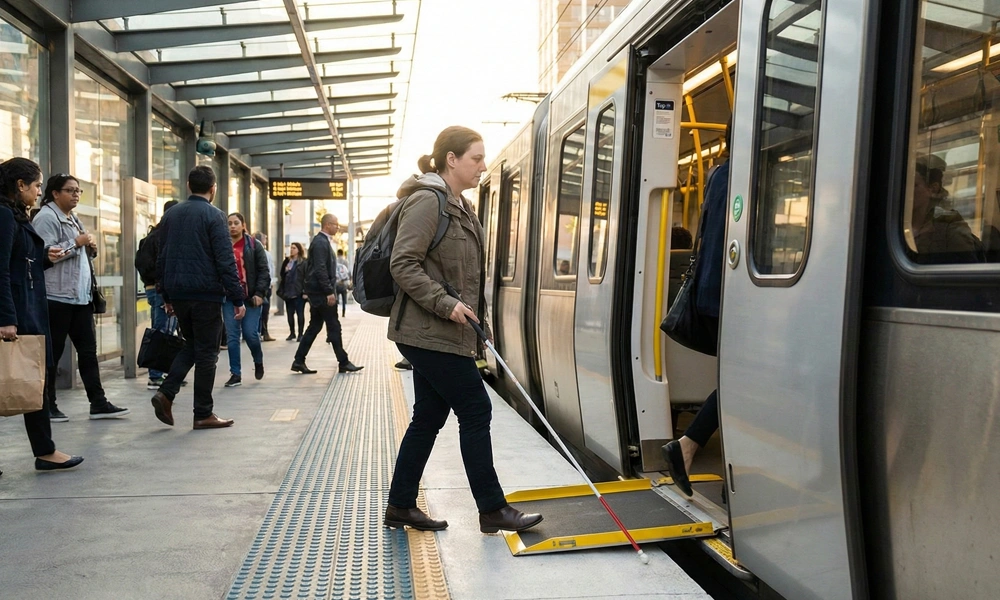
Public transport represents freedom. The ability to get to work, visit friends, attend appointments, or simply explore your city without relying on others is fundamental to independence. For vision-impaired Australians, navigating trains, trams, buses, and ferries requires strategy, practice, and confidence – but it’s absolutely achievable.
Australian cities vary enormously in their public transport systems, accessibility features, and complexity. What works in Melbourne’s extensive tram network might not apply to Brisbane’s bus-heavy system or Sydney’s combination of trains, light rail, and ferries. This guide covers universal strategies plus city-specific tips to help you master public transport wherever you live.
Understanding Your Rights
Before diving into practical strategies, know your rights. Under Australian disability discrimination laws, public transport operators must provide reasonable accommodations for passengers with disabilities. This includes accessible infrastructure, assistance when requested, and priority seating.
You have the right to:
- Travel independently with mobility aids (white canes, guide dogs)
- Request staff assistance at stations and stops
- Access priority seating
- Receive clear, accessible journey information
- Make complaints when services fail to meet accessibility standards
Transport for NSW, Public Transport Victoria, and TransLink Queensland all have dedicated accessibility services and information. Familiarize yourself with what’s available in your state.
Pre-Journey Planning
Successful public transport navigation begins long before you leave home. Thorough planning reduces stress and increases confidence.
Route Research
Research your journey completely:
- Which lines/routes do you need?
- Where do you change services?
- How many stops between your origin and destination?
- What are the platforms/stops like?
- Are there stairs, escalators, or lifts?
- What are the peak and off-peak times?
Most Australian cities now have journey planning apps with accessibility information. Apps like TripView (NSW), PTV (Victoria), and MyTransLink (Queensland) provide detailed route information compatible with screen readers.
Timing Strategies
If possible, avoid peak hours for initial journeys on new routes. Quieter periods mean:
- Less crowding and stress
- More likely to find seating
- Easier to ask staff for assistance
- Better ability to orient yourself in stations
That said, peak hours also have advantages: more frequent services, more staff present, and clearer audio announcements (they’re made more frequently).
Reconnaissance Trips
For important regular routes (like commuting to work), consider reconnaissance trips during off-peak times. Bring a sighted friend if helpful. Walk through the entire journey noting:
- Entry and exit points
- Platform locations
- Tactile paving and other navigation aids
- Where staff are typically located
- Bathroom locations
- Seating areas
This familiarity transforms anxiety into confidence when you’re making the journey for real.
Navigation Technology and Apps
Technology has revolutionized public transport accessibility for vision-impaired people.
Journey Planning Apps
Most Australian cities have official transport apps:
- NSW: TripView, Transport for NSW app
- Victoria: PTV app
- Queensland: MyTransLink app
- South Australia: Adelaide Metro app
- Western Australia: Transperth app
These apps typically offer:
- Real-time service updates
- Journey planning with accessibility options
- Service disruption notifications
- Next departure information
- Platform and stop details
Test which apps work best with your screen reader or magnification preferences.
Navigation Apps
General navigation apps help with the walking portions of your journey:
- Google Maps: Provides public transport directions with accessibility options
- BlindSquare: Specifically designed for vision-impaired navigation, announces nearby points of interest and street intersections
- Seeing AI: Can read signs, describe surroundings, and identify transport numbers
Real-Time Information
Real-time departure boards at stations provide audio announcements, but phone apps often provide more detailed, accessible information. Set up notifications for your regular routes to alert you to delays or cancellations.
Trains: Strategy and Navigation
Trains are often the most accessible public transport option due to standardized platforms, consistent station layouts, and extensive staff support.
Station Navigation
Most Australian train stations have tactile ground surface indicators (those bumpy yellow tiles) leading from entrances to platforms and key facilities. Follow these with your cane or guide dog – they’re specifically designed for vision-impaired navigation.
Key station features to locate:
- Platform access (lifts, escalators, stairs)
- Waiting areas
- Help points (emergency assistance buttons)
- Bathrooms
- Exits
Larger stations have customer service desks where staff can provide verbal directions or escort you to platforms. Don’t hesitate to use this service – it’s provided specifically for accessibility.
Finding the Right Platform
Platform locations are typically announced and displayed, but if you’re unsure:
- Use help points (present on most platforms) to contact staff
- Ask fellow passengers (most Australians are helpful when asked directly)
- Count platforms if you’ve researched the station layout beforehand
Audio announcements vary by city and station. Some are clear and frequent; others are inadequate. Always have a backup method (app alerts, counting stops, asking passengers) rather than relying solely on announcements.
Boarding Trains
Position yourself near where the train will stop – usually marked on platforms. Listen for the train’s approach and the opening doors.
When boarding:
- Use your cane to detect the gap between platform and train
- Hold the handrail for stability
- Move into the carriage efficiently – other passengers are waiting
Most modern trains have priority seating near doors with clear signage. These seats are designed for passengers with disabilities, elderly people, and pregnant women. You’re entitled to request these seats if occupied.
During the Journey
Count stops using audio announcements, your app, or simply counting the stops. If announcements are unclear, ask nearby passengers: “Could you let me know when we reach [station name]?”
Most people readily agree, and having this backup prevents missing your stop.
Stay aware of your surroundings through audio cues:
- Station announcements
- Door opening sounds
- Changes in the train’s movement
- Passenger movement patterns
Alighting
Listen for your destination announcement and prepare to exit. Move toward the doors as the train slows. Use your cane to detect the platform edge and any gap.
If you’re disoriented upon exiting, pause near a wall or post to orient yourself using tactile and audio cues. There’s no rush – take the time you need to confidently locate the exit.
Trams: Melbourne’s Unique Challenge
Melbourne’s tram network is extensive, iconic, and presents unique challenges for vision-impaired passengers.
Tram Stops
Tram stops vary enormously – from modern platforms level with tram floors to old-style stops that are basically just signs on poles. This inconsistency requires extra vigilance.
Modern “super stops” have:
- Level boarding (no step up)
- Tactile paving
- Audio announcements
- Real-time information displays
Older stops require stepping up from road level, which can be hazardous without visual cues. Use your cane to detect the step and tram door location.
Identifying Tram Routes
Trams don’t announce their route numbers clearly from outside. You need to:
- Ask the driver as you board: “Is this the number 86?”
- Use the PTV app to track arriving trams
- Count trams if multiple routes use the same stop
On-Board Navigation
Trams are often crowded, especially during peak hours. Priority seating is marked but not always respected. Don’t hesitate to request priority seating: “Excuse me, I’m vision-impaired and need priority seating.”
Audio announcements on trams are notoriously unclear. Use the PTV app with audio alerts for your destination, count stops, or ask a passenger to notify you.
Myki Readers
Myki readers (Melbourne’s payment system) are located near tram doors at inconsistent heights and positions. Run your hand along the door area to locate them. The readers beep and say “touch on” or “touch off” when successfully used.
Buses: Varied and Variable
Buses are the most common public transport across Australia but also the most variable in accessibility.
Bus Stop Identification
Finding bus stops can be challenging – they’re often just signs on poles with minimal tactile cues. Strategies include:
- Memorizing locations on regular routes
- Using GPS navigation apps that alert you to nearby stops
- Asking pedestrians for confirmation
Boarding Buses
As the bus approaches, raise your arm or cane to signal the driver to stop. Some drivers may not stop if they don’t see a clear signal.
When boarding:
- Announce your destination if unsure this is the right bus: “Does this go to [destination]?”
- Request verbal confirmation when you’ve reached your stop: “Could you let me know when we reach [destination]?”
Most Australian bus drivers are accommodating and will announce your stop. However, reliability varies by driver and how busy they are.
On-Board Experience
Buses are less predictable than trains – routes can change, stops aren’t always announced, and drivers vary in their awareness of accessibility needs.
Use apps for real-time tracking of your location and approaching stops. Set audio alerts for your destination stop as a backup to driver announcements.
Buses also offer priority seating near the front. These seats are your right when needed.
Ferries: Coastal City Transport
Sydney, Brisbane, and Perth have ferry services that present unique navigation considerations.
Wharf Navigation
Ferry wharves are complex environments with multiple berths, gangways, and vessels. Arrive early to orient yourself or request staff assistance.
Key challenges:
- Gangways move with tides and waves
- Multiple ferries departing from adjacent berths
- Crowd surges when ferries arrive
Use handrails constantly on gangways and boarding ramps. The moving, unstable surface requires extra caution.
Ferry Services
Most ferry services have:
- Staff announcing vessels and destinations
- Clear signage (though not always accessible)
- Customer service counters for assistance
Don’t hesitate to ask staff which berth your ferry departs from and request guidance to that location.
City-Specific Tips
Each Australian capital has unique public transport characteristics worth understanding.
Sydney
Sydney’s network combines trains, light rail, buses, and ferries. The Opal card works across all services. Central Station is enormous and complex – consider staff escort services for initial navigation. Real-time apps are reliable and essential.
Melbourne
Melbourne’s tram network is extensive but inconsistent in accessibility. Myki cards work on trains, trams, and buses. The free tram zone in the CBD is excellent for practicing. PTV app is essential for journey planning.
Brisbane
Brisbane relies heavily on buses supplemented by trains and ferries. TransLink Go cards work across all services. The busway system (dedicated bus roads) provides reliable, train-like bus services.
Adelaide
Adelaide’s compact public transport includes trains, trams, and buses. The free tram in the CBD is helpful for short trips. Metro cards provide integrated payment.
Perth
Perth’s train network is modern and accessible. Transperth offers excellent customer service. SmartRider cards work across all transport modes.
Canberra
Canberra’s light rail opened in 2019 with strong accessibility features. Bus network is extensive but sprawling due to the city’s design. MyWay cards provide payment.
Companion Cards and Concessions
Vision-impaired Australians are eligible for various transport concessions and support programs.
Companion Card
The Companion Card provides free entry for a support person on public transport and at participating venues. Eligibility requires needing attendant care support. Application processes vary by state but are coordinated nationally.
Concession Cards
Depending on your circumstances, you may be eligible for:
- Pensioner Concession Cards
- Health Care Cards
- Seniors Cards
- Disability Support Pension concessions
These typically provide 50% discounts on public transport fares. Contact your state’s transport authority for specific eligibility and application processes.
Free Travel Programs
Some states offer free or heavily discounted travel for people with disabilities:
- NSW offers free travel for certain disability pension recipients
- Victoria provides substantial concessions
- Queensland offers free travel for guide dog handlers
Check your state’s transport website for current programs and eligibility criteria.
Safety Considerations
Public transport safety is paramount, especially when you can’t visually assess situations.
Platform Safety
Stand behind platform safety lines (usually marked with tactile paving). Trains create strong air currents that could pull you toward the tracks. Never stand at the platform edge unless boarding.
If you feel unsafe or disoriented, press help point buttons. These connect directly to staff who can provide assistance or dispatch help.
Personal Security
Travel during daylight and peak hours when possible for increased safety. Sit near other passengers and staff. Trust your instincts – if a situation feels unsafe, move to a different carriage or exit at the next stop.
Keep valuables secure and be aware that crowded transport attracts pickpockets. Your phone, cards, and cash should be in secure pockets or bags.
Emergency Situations
In emergencies:
- Follow staff instructions
- Use help points to contact authorities
- Move toward exits identified by audio alarms
- Ask other passengers for assistance if needed
Most Australian transport services have emergency protocols specifically accounting for passengers with disabilities. Staff are trained to provide assistance during evacuations.
Building Confidence
Mastering public transport doesn’t happen overnight. Expect a learning curve with setbacks and successes.
Start Small
Begin with simple routes during quiet times. Gradually increase complexity as confidence grows. There’s no shame in asking for help – experienced public transport users do this all the time.
Orientation and Mobility Training
Vision Australia and Guide Dogs Australia offer orientation and mobility training specifically covering public transport. These services teach professional navigation techniques and provide supervised practice on real routes.
Many participants find these services transformational for their confidence and capability.
Practice Runs
Do practice runs of important routes before you need them for real. Knowing you can reliably get to work, medical appointments, or social engagements reduces anxiety and increases independence.
Learn from Mistakes
You’ll miss stops, board wrong services, or get disoriented. Everyone does initially. Each mistake teaches you something about navigation and problem-solving. Be patient with yourself.
Moving Forward
Public transport mastery represents independence, freedom, and confidence. The effort required to learn routes and strategies pays dividends in expanded life possibilities.
Australian cities are gradually improving public transport accessibility, though progress is uneven. When you encounter barriers – poor announcements, unhelpful staff, inadequate infrastructure – make complaints to transport authorities. Your feedback drives improvements for all passengers with disabilities.
You’re not alone in this journey. Thousands of vision-impaired Australians successfully navigate public transport daily. With strategy, practice, and support, you can join them in accessing your city confidently and independently.