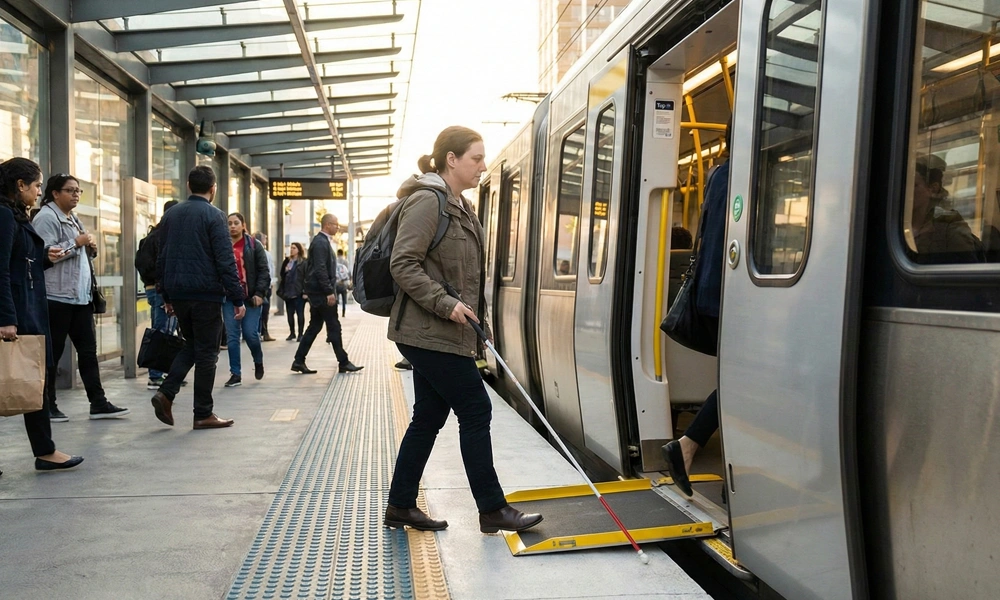
Travel and Holidays: Exploring Australia with Vision Impairment

Australia is a traveller’s paradise – from tropical rainforests and coral reefs to red desert landscapes, cosmopolitan cities, and rugged coastlines. Vision impairment doesn’t disqualify you from exploring this diverse country. Yes, travel requires extra planning and consideration, but the experiences, memories, and sense of adventure are absolutely worth the effort.

This guide covers everything from planning accessible holidays to navigating airports, choosing accommodations, and exploring Australia’s incredible destinations with confidence.

The Planning Stage

Successful travel begins months before departure. Unlike spontaneous weekend getaways, accessible travel requires research, communication, and preparation.

Choosing Destinations

Start by honestly assessing what type of travel you enjoy and what’s realistic for your capabilities. A bustling city break in Sydney or Melbourne offers different challenges and rewards than a quiet coastal retreat or outback adventure.

Consider:

  • How comfortable are you navigating unfamiliar environments?
  • Do you prefer structured tours or independent exploration?
  • What level of physical activity do you enjoy?
  • Do you need regular access to support services?
  • What’s your budget for accessibility accommodations?

There’s no wrong answer – just honest self-assessment that ensures you choose trips you’ll genuinely enjoy rather than endure.

Research and Resources

Tourism Australia provides accessibility information for major attractions and destinations. Many state tourism websites include accessibility guides highlighting suitable venues, accommodations, and activities.

Join online communities of vision-impaired travellers. Facebook groups and forums provide real-world advice from people who’ve actually visited destinations you’re considering. Their experiences often reveal details official websites miss.

Contact destination visitor centres before booking anything. Ask specific questions about accessibility, available support, and vision-impaired friendly attractions. Staff can provide invaluable local knowledge.

Booking Accommodations

Accommodation choice significantly impacts your travel experience. You’ll spend considerable time there, and it becomes your base for orientation and rest.

Hotels vs Apartments vs Other Options

Hotels offer structure and support – 24-hour reception, staff assistance, room service, and consistent layouts across rooms. This predictability helps with orientation and provides ready assistance when needed.

However, hotels can be vast and confusing. Large resorts with multiple buildings, wings, and levels present navigation challenges. Request rooms near lifts, with clear routes to reception and dining areas.

Serviced apartments or Airbnbs provide more independence but less support. You’re responsible for all your own navigation and problem-solving. The trade-off is often better value, kitchen facilities, and more space.

For vision-impaired travellers, I’d generally recommend hotels for first-time destinations and apartments for places you’re more familiar with or when travelling with companions who can assist with initial orientation.

Communicating Your Needs

When booking accommodation, communicate clearly about your requirements:

  • Ground floor or lift access
  • Room near lifts/reception
  • Good lighting or specific light preferences
  • Clear pathways without obstacles
  • Assistance with luggage and orientation

Most Australian hotels are required under disability discrimination laws to provide reasonable accommodations. Don’t be shy about requesting what you need.

Room Layout

Upon arrival, request a thorough room orientation from staff. Have them describe:

  • Bathroom layout and controls
  • Light switches and controls
  • Furniture placement
  • Minibar, safe, and other features
  • Emergency exits and procedures
  • Room service and contact numbers

Take time to physically explore the room yourself after this verbal orientation. Use your hands to map furniture placement, test all switches and controls, and establish a mental layout.

Keep your room consistently organized. Designate specific spots for keys, phone, wallet, and other essentials. This prevents frantic searching when you’re ready to head out exploring.

Air Travel

Flying opens up the entire country (and beyond), but airports and aircraft present unique accessibility challenges.

Booking Flights

When booking, register your accessibility requirements:

  • Vision impairment requiring assistance
  • Guide dog travel (if applicable)
  • Preference for aisle seats near the front
  • Any specific needs

Australian airlines including Qantas, Virgin Australia, Jetstar, and Rex all have accessibility services. Contact them directly rather than booking through third-party sites, which may not properly record your needs.

Many vision-impaired travellers prefer direct flights to avoid the complexity of changing planes and navigating unfamiliar airports during connections.

Airport Navigation

Arrive at airports early – at least 90 minutes for domestic flights, 3 hours for international. This buffer accommodates the extra time accessibility services require.

Upon arrival, head to your airline’s service desk and identify yourself as requiring assistance. Airlines provide escort services from check-in through security, to the gate, and onto the aircraft. This service is free and your right.

Don’t attempt to navigate large airports independently on your first visit. The time pressure, crowds, and confusing layouts create unnecessary stress. Accept the assistance – it’s what the service exists for.

Security Screening

Inform security staff you’re vision-impaired before screening. They’ll provide verbal guidance through metal detectors and explain any additional screening required.

If you use a white cane, it will go through x-ray screening but will be returned before you move through the security area. Guide dogs walk through metal detectors with you.

Security can be stressful with the noise, crowds, and time pressure. Stay calm, follow instructions, and don’t hesitate to ask for clarification if you’re unsure what’s expected.

Boarding and In-Flight

Pre-boarding is available for passengers requiring assistance. You’ll board before general passengers, giving you time to settle in and stow belongings without crowds pressing behind you.

Flight attendants should provide a safety briefing covering your row’s emergency exits. If they don’t, request this information – it’s critical safety information you can’t access visually.

During flights, don’t hesitate to request assistance finding the bathroom, locating overhead bins, or managing meal service. Flight attendants are trained to assist passengers with disabilities.

Arriving at Your Destination

Upon landing, wait for an airline staff member to escort you through the terminal to baggage claim and onward transport. Don’t try to follow crowds independently in an unfamiliar airport.

If you’re being met by someone, communicate meeting points clearly beforehand. “I’ll be escorted to the arrivals area – look for me near the [airline] service desk” is clearer than “meet me at arrivals.”

Ground Transport at Destinations

Once you’ve reached your destination, getting around presents daily challenges.

Taxis and Rideshare

Taxis and rideshare services (Uber, DiDi) provide flexible transport without requiring you to navigate unfamiliar public transport.

When booking rideshare:

  • Use the app’s accessibility features
  • Put your pickup location somewhere staff can direct you (hotel entrance, specific landmark)
  • Include in your profile that you’re vision-impaired
  • Message drivers to confirm pickup location

Guide dogs are legally entitled to travel in all taxis and rideshares in Australia, though some drivers are unfortunately unaware of this. If a driver refuses, report them immediately to the company.

Tours and Tour Groups

Organized tours solve many navigation challenges. Someone else handles logistics while you focus on experiencing the destination.

When booking tours:

  • Explain your vision impairment and ask if the tour is suitable
  • Ask about group sizes (smaller groups accommodate accessibility better)
  • Clarify walking distances and physical requirements
  • Request descriptive guidance during the tour

Many tour operators provide excellent accessibility support once they understand your needs. Others are less experienced – their response to your enquiries tells you whether they’re worth booking.

Accessible Tour Options

Some Australian operators specialize in accessible tourism:

  • Accessible Tours Australia provides customized tours for people with disabilities
  • Many state tourism bodies offer accessible experience directories
  • Some national parks have specific vision-impaired friendly programs

Research these options when planning your itinerary.

Exploring Cities

Australian capital cities offer diverse attractions, generally good public transport, and plenty of accessible activities.

City Navigation

Cities like Sydney, Melbourne, and Brisbane have defined tourism precincts (The Rocks, Southbank, Queen Street Mall) that concentrate attractions in walkable areas.

These areas typically have:

  • Good pedestrian infrastructure
  • Clear audio signals at crossings
  • Tourist information centres with assistance
  • Accessible public facilities

Start with these tourist-focused areas before venturing into less familiar neighbourhoods.

Audio Described Tours

Many major attractions now offer audio description services:

  • Museums increasingly provide vision-impaired friendly tours
  • Some art galleries offer tactile tours of selected works
  • Historical sites may provide detailed audio guides

Call ahead to ask about these services. Many are available but not widely promoted.

City Experiences

Vision-impaired friendly city activities include:

  • Food tours (experiencing cuisine through taste and smell)
  • Music venues and concerts
  • Historical walking tours with detailed narration
  • Markets (engaging through sound, smell, and conversation)
  • Theatre with audio description

Focus on experiences that engage multiple senses rather than primarily visual attractions.

Coastal and Beach Destinations

Australia’s beaches are iconic, and with preparation, they’re accessible to vision-impaired visitors.

Beach Access

Many popular beaches now have accessibility features:

  • Beach matting providing stable pathways across sand
  • Accessible change rooms and facilities
  • Beach wheelchairs available for loan
  • Surf rescue services aware of accessibility needs

Contact local councils before visiting to ask about available facilities. Some beaches have accessibility volunteers who provide specific assistance.

Beach Safety

Swimming at beaches requires extra caution:

  • Always swim between the flags
  • Inform surf lifesavers you’re vision-impaired
  • Swim with a companion who can provide visual information
  • Be conservative about conditions – rough surf is challenging enough with full vision

Patrolled beaches are essential. Unpatrolled beaches present unnecessary risks for vision-impaired swimmers.

Coastal Towns

Coastal towns often have manageable layouts, friendly locals, and relaxed atmospheres. Places like Byron Bay, Port Douglas, or Margaret River offer beach access combined with accessible town centres, good food, and interesting experiences.

Regional and Remote Australia

Outback and regional Australia offer unique experiences but present significant accessibility challenges.

Remote Area Considerations

Remote travel requires realistic assessment:

  • Distances are vast with limited services
  • Medical support may be hours away
  • Navigation aids are minimal
  • Support services for vision impairment are often non-existent

That doesn’t mean remote travel is impossible – it means you need companions, thorough planning, and realistic expectations.

Tour-Based Remote Travel

The safest way to experience remote Australia is through organized tours:

  • Uluru tours from Alice Springs
  • Kimberley tours from Broome
  • Great Barrier Reef tours from Cairns
  • Cape York expeditions

These tours handle all logistics, transport, and safety while providing guided experiences of these incredible places.

National Parks

Australia’s national parks range from easily accessible to extremely remote. Many parks now offer:

  • Accessible boardwalks and pathways
  • Audio information at key points
  • Ranger-guided programs with descriptive narration
  • Tactile exhibits at visitor centres

Contact park authorities before visiting to understand what’s available and what’s realistic for your mobility and navigation capabilities.

Wildlife Experiences

Australian wildlife is a major drawcard, and many wildlife experiences are vision-impaired friendly.

Wildlife Sanctuaries

Wildlife parks and sanctuaries often provide:

  • Keeper talks with detailed descriptions
  • Touch encounters with some species
  • Guided tours explaining exhibits
  • Accessible pathways through enclosures

Places like Taronga Zoo (Sydney), Healesville Sanctuary (Melbourne), and Australia Zoo (Queensland) have dedicated accessibility services.

Wild Encounters

Experiencing wildlife in natural habitats engages multiple senses:

  • Hearing kookaburras and cockatoos
  • Penguins returning to shore at dusk (Phillip Island, St Kilda)
  • Whale watching with detailed narration
  • Rainforest walks experiencing sounds and smells

Choose experiences where vision isn’t the only sense engaged.

Travel Insurance

Travel insurance is essential, particularly when disclosing pre-existing conditions including vision impairment.

Standard travel insurance typically covers you, but read policies carefully. Some insurers specifically exclude or charge extra for disability-related claims.

Look for policies covering:

  • Medical emergencies
  • Trip cancellation due to accessibility issues
  • Lost or damaged assistive devices
  • Additional costs from accessibility accommodation

Be completely honest about your vision impairment when obtaining quotes. Non-disclosure can void your entire policy if you need to claim.

Managing Medications and Health

Medication Management

Bring sufficient medications for your entire trip plus several days extra. Carry medications in original packaging with prescriptions.

Use your phone to set medication reminders – time zones and changed routines make it easy to miss doses.

If you use medication organization systems (Webster packs, pill organizers), continue these on holiday. Don’t assume you’ll remember changed routines.

Accessing Healthcare

Research medical facilities near your accommodation before departure. Know where the nearest hospital, pharmacy, and optometrist are located.

If you’re travelling interstate, your Medicare card provides coverage across Australia. Keep it accessible throughout your trip.

Technology and Apps for Travel

Essential Apps

  • Google Maps: Navigation with public transport directions and accessibility options
  • Uber/DiDi: Rideshare transport in most Australian cities
  • TripAdvisor/Google Reviews: Research accessible venues through reviews
  • Seeing AI/Be My Eyes: Visual assistance through your phone
  • Weather apps: Plan activities around comfortable conditions

Keeping Devices Charged

Bring chargers and backup battery packs. Your phone is your primary navigation and assistance tool – a flat battery creates significant problems.

International adapters aren’t needed within Australia, but if you’re visiting from overseas, bring appropriate converters.

Travelling with Companions

Travelling with companions offers support but requires communication about roles and boundaries.

Clarifying Expectations

Discuss beforehand:

  • What assistance you want vs what you can manage independently
  • How you’ll communicate during navigation
  • Individual interests and compromise on activities
  • Alone time needs and independence

Good companions understand you’re partners in travel, not patient and caregiver.

Maintaining Independence

Even with companions, maintain independence where possible:

  • Navigate familiar routes yourself
  • Make decisions about itineraries and activities
  • Handle your own bookings and communications when practical

Travel is about your experience and growth, not just being shepherded around.

Embracing the Experience

Travel inevitably involves discomfort, uncertainty, and occasional frustration – for everyone, not just vision-impaired travellers. Don’t let challenges overshadow the incredible experiences you’re having.

Focus on what you can engage with:

  • Conversations with locals revealing cultural insights
  • Unique tastes of regional cuisines
  • Sounds of unfamiliar environments
  • Tactile experiences of different landscapes
  • Sense of achievement from navigating challenges

Some of the most rewarding travel moments come from overcoming difficulties and discovering your own capability.

Australian destinations offer incredible diversity, and most of it is accessible with planning, support, and confidence. Whether you’re exploring cosmopolitan Melbourne, swimming at the Great Barrier Reef, or experiencing Uluru’s cultural significance, vision impairment is simply one factor to accommodate, not a barrier to remarkable experiences.

Every trip builds your confidence and expands your understanding of what’s possible. Start with manageable destinations, learn from each experience, and gradually expand your travel horizons. Australia is yours to explore.


Moving House with Vision Impairment: A Complete Australian Guide

Moving house ranks among life’s most stressful events for anyone, but when you’re vision-impaired, the challenges multiply. You’re not just packing up belongings and changing addresses – you’re leaving behind familiar spatial layouts, established routines, and the mental maps you’ve carefully built over months or years. The good news? With proper planning and the right support, you can navigate a move successfully while maintaining your independence.

This guide walks you through every stage of moving house with vision impairment, from the initial decision through to settling into your new home.

Before You Decide to Move

The decision to move deserves careful consideration when you’re vision-impaired. Beyond the usual factors like cost, location, and property features, you need to think about accessibility, orientation challenges, and available support services in your new area.

Assessing Your Current Needs

Start by honestly evaluating what works and doesn’t work in your current home. Which accessibility features are essential? What modifications have you made that you’ll need to replicate? Understanding these requirements helps you choose a new property that genuinely suits your needs.

Consider also your support network. Do you rely on nearby family, friends, or regular support workers? Moving far from established connections can impact your independence, so factor this into your decision.

Location Research

Research potential suburbs or towns thoroughly. Look into public transport accessibility, proximity to medical services, shopping centres, and community facilities. Vision Australia has local offices across the country that can provide area-specific advice about services and support available in different regions.

If you’re moving interstate, contact Vision Australia or similar organisations in your destination state well before the move. They can help you understand what services transfer and what new registrations you’ll need.

Finding the Right Property

Whether you’re renting or buying, finding an accessible property requires more detailed inspection than usual.

Initial Property Search

When searching online, look for properties with good natural light (multiple windows, north-facing living areas). Ground floor or lift-access properties eliminate stair navigation. Open-plan designs are generally easier to navigate than homes with many small rooms and doorways.

Look for mentions of wide hallways, level entries, and minimal stairs. Properties with outdoor lighting and well-lit common areas (in apartments) are safer for arriving home after dark.

Property Inspections

Never skip an in-person inspection, even if it requires extra effort to arrange. Bring a trusted friend or family member who can describe visual details you might miss. Take your time during inspections – walk the entire property multiple times to build a mental map.

Pay attention to:

  • Natural light levels throughout the day
  • Contrast between floors, walls, and fixtures
  • Width of doorways and hallways
  • Kitchen and bathroom layouts
  • Noise levels (which help with orientation)
  • Outdoor areas and entry points

Ask questions about modifications. Landlords must consider reasonable modification requests under Australian discrimination law, but knowing their attitude upfront helps avoid future conflicts.

Working with Real Estate Agents

Be upfront about your vision impairment with agents. Most are accommodating once they understand your needs. Request additional inspection time if needed, and don’t hesitate to ask for specific photos or videos of features you want to examine more closely.

For rental properties, ask about the landlord’s history with accessibility modifications. Some are more flexible than others about installing grab rails, improving lighting, or allowing tactile markers.

Planning Your Move

Once you’ve secured a new property, the real planning begins. A structured approach reduces stress and ensures nothing important gets overlooked.

Timeline and Checklist

Start planning at least 6-8 weeks before moving day. Create a comprehensive checklist covering everything from booking removalists to updating your address with government departments. Many people find audio notes or voice memos easier than written lists for tracking tasks.

Key deadlines to note:

  • Notice periods for current property (usually 21-30 days for rentals)
  • Utilities connection at new property
  • Mail redirection with Australia Post
  • Government departments (Centrelink, Medicare, electoral roll)
  • Medical services and specialists
  • Banking and financial institutions

Decluttering and Organising

Moving is the perfect opportunity to declutter. If you haven’t used something in the past year, seriously consider whether it’s worth packing and unpacking. Less stuff means a simpler move and easier organisation in your new home.

Sort belongings into categories: keep, donate, bin. Use different textured bags or boxes to distinguish between them – ribbed plastic for donations, smooth boxes for keeping, perhaps. Label everything with tactile markers or audio labels using your phone.

Charity organisations like Vinnies, Salvos, and local op shops often collect furniture and goods. Just call ahead to arrange pickup.

Packing Strategies

Pack room by room, keeping similar items together. Use consistent box sizes where possible – this makes stacking and identifying boxes easier. Heavy items in small boxes, light items in larger ones.

Labelling System

Develop a clear labelling system using:

  • Large print labels in high contrast colours
  • Tactile markers (bump dots in different patterns for different rooms)
  • Audio labels (many smartphones have accessibility apps for recording labels)
  • Colour coding with textured tape

Label boxes on multiple sides and on top, so you can identify them regardless of how they’re stacked. Include room destination and general contents: “Kitchen – pots and pans” or “Bedroom – linen.”

Pack an “essentials box” that travels with you, not on the truck. Include medications, important documents, phone chargers, a change of clothes, toiletries, kettle, and basic kitchen items. Mark this box distinctly so you can identify it immediately.

Choosing and Working with Removalists

Professional removalists can make an enormous difference, but choosing the right company matters enormously when you’re vision-impaired.

Finding Suitable Removalists

Look for removalists experienced with accessibility needs. When comparing quotes, ask specifically about their experience with vision-impaired clients. Do they understand the need for clear communication? Will they carefully place boxes in designated rooms rather than just dumping everything in the garage?

Platforms like Find a Mover let you compare quotes from multiple removalists and read reviews from other customers. This helps you find companies with good communication practices and reliable service – both crucial when you need extra clarity about logistics.

Communicating Your Needs

Be clear and specific about your requirements from the first conversation. Explain that you’ll need verbal descriptions of where items are being placed, confirmation when tasks are complete, and patience with questions.

Request that the removalists:

  • Announce themselves when entering rooms
  • Describe what they’re doing (“I’m moving the couch now”)
  • Place boxes in the specific rooms you’ve designated
  • Keep pathways clear during the move
  • Let you know when they’re finished with each area

Good removalists will appreciate this clarity rather than finding it burdensome.

Moving Day Logistics

Have a trusted friend or family member with you on moving day if possible. They can help supervise, answer questions, and provide visual confirmation of the progress.

Create a floor plan of your new home (tactile or audio description) showing where furniture should go. Share this with the removalists beforehand. The clearer your instructions, the less chaos on moving day.

Keep your essentials box and important documents with you in your car, not on the truck. This includes medications, valuables, and anything you absolutely cannot risk losing.

Vehicle Transport

If you’re moving interstate or long distances, you might need to arrange separate transport for your vehicle. Even if you don’t drive yourself, you may have a car that family members use or that’s fitted with hand controls or other modifications.

Vehicle Move specialises in transporting vehicles safely across Australia, which can be particularly valuable if your car has expensive accessibility modifications that you want to protect during the move. This also saves the wear and tear of a long drive and means you can fly to your new location rather than spending days on the road.

When arranging vehicle transport, mention any modifications so the transport company can take appropriate care. Hand controls, wheelchair loading systems, or other adaptations need careful handling.

End of Lease Cleaning

If you’re renting, end of lease cleaning is non-negotiable for getting your bond back. For vision-impaired tenants, this presents obvious challenges – it’s hard to verify that everything is spotlessly clean when you can’t see fine details.

Professional end of lease cleaning is worth every dollar. Companies that specialise in this service understand exactly what real estate agents and landlords expect. They typically guarantee their work, meaning if the property manager isn’t satisfied, they’ll return to fix any issues.

Cleaners Now connects you with experienced end of lease cleaners across Australia. These professionals know the checklist that property managers use during final inspections – from ceiling fans and light fittings to window tracks and oven interiors. They’ll ensure your property meets the required standard, protecting your bond refund.

When booking end of lease cleaners, schedule them after you’ve completely moved out. An empty property is easier to clean thoroughly. Book your final inspection with the property manager for a day or two after the clean, giving you time to address any issues if they arise.

Disconnecting and Connecting Utilities

Managing utilities across a move requires careful timing and organisation.

Disconnection at Old Property

Contact each provider about 2-3 weeks before moving:

  • Electricity
  • Gas
  • Water (if not included in rent)
  • Internet and phone
  • Pay TV

Schedule disconnection for the day after you move out (or the end of your lease). This ensures you have services available for any final cleaning or last-minute trips.

Request final bills be sent to your new address. Keep confirmation numbers for all disconnections.

Connection at New Property

Arrange connections at your new property to start on moving day or the day before. There’s nothing worse than arriving at a new home with no power or water.

Many providers now operate online-only, which can be challenging for vision-impaired customers. Phone customer service and explain you need to arrange services over the phone rather than online. Most providers accommodate this, though you might need to be persistent.

The Australian Communications Consumer Action Network provides advocacy and information about accessible telecommunications services if you encounter difficulties with phone or internet providers.

Transferring Support Services

If you receive disability support services, organising transfers well in advance is crucial.

NDIS Participants

If you’re on the NDIS, notify your Local Area Coordinator or support coordinator about your move as soon as possible. If you’re moving within the same NDIS region, your plan usually continues unchanged. Interstate moves require transferring to a new NDIS office, which can take time.

Update your NDIS address and contact details through the myplace portal or by calling 1800 800 110. If you use support workers regularly, discuss whether they can continue supporting you at your new location or if you need to find new workers.

Other Support Services

Contact all your regular services:

  • Vision Australia or similar organisations
  • Guide dog organisations
  • Orientation and mobility specialists
  • Occupational therapists
  • Medical specialists and GPs
  • Physiotherapists or other allied health

Many will need new referrals or registrations if you’re moving significant distances. Ask for recommendations for similar services in your new area.

Settling Into Your New Home

The first few weeks in a new home are the most challenging. Be patient with yourself – building confidence in a new space takes time.

Orientation and Mental Mapping

Start by learning one pathway at a time. Master the route from bedroom to bathroom, then bedroom to kitchen, and so on. Use tactile landmarks – a particular chair, a textured rug, a doorway – to build your mental map.

Walk each route multiple times in both directions. Use your hands to trace walls and furniture. Some people find it helpful to count steps or use other measurement systems.

Create anchor points – specific pieces of furniture or features you can reliably locate and navigate from. “The kitchen island is five steps from the hallway entrance and three steps from the fridge.”

Safety Modifications

Implement safety features immediately:

  • Install grab rails in bathroom
  • Add non-slip mats
  • Set up good lighting (bring lamps if needed)
  • Mark hazards with high-contrast tape
  • Add tactile markers to important controls

Don’t wait until you “settle in” – these modifications prevent falls and injuries while you’re still learning the space.

Unpacking Strategy

Unpack room by room, starting with essentials:

  1. Bedroom (bed, bedding, clothes)
  2. Bathroom (toiletries, medications)
  3. Kitchen (basics for meals)
  4. Living areas

Set up each room completely before moving to the next. This creates functioning spaces rather than partial chaos everywhere.

As you unpack, establish consistent homes for items. Put things in logical, easy-to-reach locations, and commit to always returning them to the same spot.

Exploring Your Neighbourhood

Once your home is basically functional, start exploring your neighbourhood. Begin with short walks around your street, gradually extending your range. Note landmarks like particular trees, changes in pavement texture, or distinctive sounds.

Locate essential services:

  • Nearest bus stop or train station
  • Local shops
  • Medical centres
  • Pharmacy
  • Community facilities

Consider an orientation and mobility session with Vision Australia in your new area. They can help you plan safe routes and teach you local navigation strategies.

Building New Routines

Routines provide structure and confidence. In a new home, you need to consciously establish new patterns.

Morning and Evening Routines

Create consistent routines for daily activities. Always put your keys in the same spot. Charge your phone in the same location. Follow the same sequence when preparing for bed.

These habits reduce cognitive load and make daily life smoother. After a few weeks, they’ll become automatic.

Shopping and Services

Find local services that work for you. Does the nearest supermarket offer online shopping with delivery? Is there a local pharmacy that provides Webster packs? Can you arrange regular home delivery of groceries?

Some people establish relationships with local shop owners who can assist with specific needs. A friendly butcher who’ll set aside specific cuts or a baker who knows you need someone to read the label.

Staying Connected

Moving disrupts social connections, which can be isolating. Actively maintain existing relationships and build new ones.

Maintaining Old Connections

Schedule regular calls with friends and family from your previous area. Video calls help maintain closeness. Share updates about your new home and neighbourhood.

If distance permits, plan occasional visits. Keeping these connections alive provides emotional support during adjustment.

Building New Connections

Look for local groups and activities:

  • Vision Australia social groups
  • Community centres with accessible programs
  • Local councils often run inclusive activities
  • Special interest groups (book clubs, craft groups, etc.)

Online communities also help. Facebook groups for vision-impaired Australians provide peer support and practical advice.

When Things Feel Overwhelming

Some days will be hard. You’ll forget where you put something, walk into furniture, or feel frustrated by the unfamiliarity of everything. This is completely normal.

Give yourself at least three months to adjust. Building confidence in a new space takes time, and comparing yourself to how capable you felt in your old home isn’t fair.

If you’re struggling significantly, reach out for support:

  • Vision Australia: 1300 84 74 66
  • Beyond Blue: 1300 22 46 36
  • Lifeline: 13 11 14

Professional orientation and mobility training can significantly reduce adjustment time and improve your confidence.

Looking Forward

Moving house with vision impairment is undeniably challenging, but it’s absolutely manageable with planning, support, and patience. Each move teaches you more about your needs and capabilities. You’ll develop strategies and systems that make future moves easier.

Your new home represents new opportunities – perhaps better accessibility, closer to family, more space, or simply a fresh start. Focus on the possibilities rather than just the challenges.

Remember, asking for help isn’t weakness – it’s intelligent planning. Use professional services for removals, cleaning, and orientation. Accept support from friends and family. Access available resources through Vision Australia, NDIS, and local services.

With time, your new house will become home – familiar, comfortable, and navigable. You’ll develop new routines, mental maps, and confidence. The disorientation you feel now is temporary. Your capability and independence are not.

Social Confidence: Navigating Australian Social Life with Vision Impairment

There’s a common misconception that vision impairment means withdrawing from social life. Nothing could be further from the truth. Yes, navigating cafés, concerts, beaches, and social gatherings requires some extra thought and strategy, but the richness of connection, experience, and community is absolutely within reach. Australian social culture – from weekend barbies to beachside meetups – can be fully enjoyed with the right approaches and a bit of confidence.

This guide explores practical strategies for participating fully in Australian social life while managing vision impairment.

The Social Confidence Mindset

Before diving into specific situations, let’s address the elephant in the room: many vision-impaired people worry about being a burden or making social situations awkward. This mindset is understandable but ultimately unhelpful.

The reality? Most Australians are willing to help – they just don’t always know how. Your confidence in communicating your needs sets the tone for every social interaction. When you’re matter-of-fact about your vision impairment, others typically follow your lead.

Think of it this way: you’re not asking for special treatment, you’re simply letting people know how to include you effectively. That’s not a burden – it’s good communication.

Communicating Your Needs

Clear, direct communication is your most valuable social tool. Vague hints or hoping people will “just figure it out” rarely works well.

The Introduction

When meeting new people, decide how and when to mention your vision impairment based on context. In some situations, it’s immediately relevant: “Hi, I’m Sarah, and I’m vision-impaired, so I might not recognise you if we meet again – please introduce yourself.” In other contexts, you might mention it naturally as it becomes relevant.

There’s no single “right way” to disclose. Some people prefer being upfront immediately, while others mention it only when necessary. Both approaches are valid – do what feels comfortable for you.

Specific Requests

Replace “I can’t see well” with specific, actionable information:

  • “I need you to verbally tell me where the chairs are”
  • “Can you describe who else is here?”
  • “Please say my name before you start speaking to me”
  • “I’ll need your arm to navigate to the table”

Specific requests get specific results. People genuinely want to help but often don’t know what’s useful.

Setting Boundaries

You’re not obligated to accept every offer of help. If someone’s “assistance” actually makes things harder, politely redirect: “Thanks, but I’ve got this” or “Actually, if you could just describe where the door is, I can navigate there myself.”

It’s also fine to decline social invitations when you need rest or simply don’t feel like navigating challenges that day. Protecting your energy is self-care, not antisocial behaviour.

Dining Out

Australian café and restaurant culture is central to social life. Fortunately, most venues are accommodating once they understand your needs.

Choosing Venues

When friends suggest meeting up, don’t hesitate to express preferences based on accessibility. Well-lit venues with clear layouts are easier to navigate. Quieter restaurants aid conversation when you’re relying on verbal cues to know who’s speaking.

Outdoor dining can be lovely but presents challenges with uneven surfaces and changing light. If you’re keen on alfresco dining, arrive before sunset when possible, and use your cane or companion’s arm to navigate.

Arriving and Seating

When you arrive, let staff know you’re vision-impaired. Most will happily guide you to your table and describe obstacles along the way. If they grab your arm without asking, gently redirect: “Thanks, I’d prefer to take your arm” – this gives you more control.

Request seating that works for you. A table near good lighting helps with reading menus or seeing your plate. Avoid spots directly under harsh downlights (glare) or in dark corners. Window seats provide natural light but can create backlighting issues, making companions’ faces hard to see.

Menus and Ordering

Many venues now have online menus you can access on your phone with screen readers or magnification apps. Call ahead and ask if they have a digital menu or large print options.

If not, it’s completely acceptable to ask staff or companions to read the menu aloud. Frame it practically: “Could you tell me what pasta dishes you have?” rather than reading the entire menu from start to finish.

Be specific with questions about dishes: “Does the salad come on a plate or in a bowl?” “Are there any ingredients I might not expect?” This prevents surprises and helps you eat confidently.

Navigating the Meal

The “clock method” helps locate food on your plate: “Your steak is at 6 o’clock, vegetables at 3 o’clock, potatoes at 9 o’clock.” This simple system works brilliantly once everyone knows it.

Don’t stress about perfect table manners. Occasional spills or missed forkfuls happen to everyone. Good friends don’t care, and strangers have their own things to worry about.

If you need to leave the table for the bathroom, ask for verbal directions or accept a companion’s offer to guide you. There’s zero shame in either approach.

Cafés and Coffee Culture

Australians take their coffee seriously, and cafés serve as informal meeting spaces and workspaces. Navigating busy cafés requires different strategies than restaurants.

Ordering at the Counter

Many cafés require ordering at the counter rather than table service. If the counter layout isn’t clear, ask staff: “Where should I stand to order?” They’ll direct you to the right spot.

When ordering, be clear about your payment method if you need assistance: “I’m paying by card and I’m vision-impaired – could you position the EFTPOS terminal for me?” Most terminals now have audio options for PIN entry, but not all venues know how to activate them.

Finding Seating

In busy cafés, locating an empty table can be tricky. Don’t hesitate to ask staff or other patrons: “Excuse me, are there any free tables?” People are generally helpful, especially when they understand why you’re asking.

Once seated, orient yourself to your surroundings. Where’s the bathroom? Where’s the exit? Where are other people seated? This mental map helps you move confidently.

Sugar, Milk, and Condiments

Communal condiment stations present challenges. It’s perfectly fine to ask someone nearby: “Could you please pass the sugar?” or “Which one is the skim milk?” Most people respond positively to simple, direct requests.

Some cafés now offer assistance cards that indicate you may need help. While not widespread in Australia yet, Vision Australia can provide information about these emerging tools.

Social Gatherings and Parties

Parties, barbecues, and casual get-togethers are staples of Australian social life. With some preparation, you can fully participate.

Arriving at New Venues

Whether it’s a house party or a community event, arriving at an unfamiliar venue requires orientation. If possible, arrive with a friend who can describe the layout: “The kitchen is straight ahead, bathroom down the hall on the left, backyard through the sliding door.”

Alternatively, ask the host for a quick tour when you arrive. Most hosts are happy to show you around, especially if you explain it helps you move independently throughout the event.

Navigating Crowds

Crowded parties are challenging for everyone but particularly tricky when vision-impaired. White canes help people give you space, but in dense crowds, you might prefer using a companion’s arm.

Find a comfortable spot to settle – perhaps near a wall or in a corner – where you can engage in conversation without constantly navigating bodies. There’s nothing wrong with being strategically stationary at parties.

Food and Drinks

Buffets and shared food situations require strategy. Ask someone to describe what’s available and where items are located. It’s completely acceptable to request someone help you fill a plate, or to take just a few items you can confidently identify.

For drinks, stick to cups or glasses you can easily distinguish. Avoid the common punch bowl unless you’re confident about pouring independently. There’s wisdom in knowing your limits and choosing accordingly.

Conversations in Groups

Group conversations can be disorienting when you can’t see who’s speaking. A few strategies help:

Ask people to say their names before speaking: “Hi everyone, before we start, could people say their names when they talk? It helps me follow the conversation.”

Position yourself strategically. Sitting or standing with your back to a wall means voices come from one direction rather than surrounding you.

Don’t fake understanding. If you miss part of a conversation, it’s better to say “Sorry, who just said that?” than to pretend you’re following along.

The Great Australian Beach Culture

Beach culture is deeply woven into Australian identity. Vision impairment doesn’t exclude you from surf, sand, and coastal socialising.

Getting to the Beach

Many Australian beaches have accessibility features you might not know about. Beach matting creates stable pathways across sand, and beach wheelchairs are available at numerous locations. Contact local councils or Accessible Beaches Australia for information about specific beaches.

If you’re meeting friends at the beach, establish a specific meeting point with clear landmarks: “Meet at the flags, northern end” or “At the surf club building entrance.” “Near the water” is too vague in a busy beach environment.

Navigating Sand and Surf

Walking on sand is unpredictable – slopes change, holes appear, and obstacles hide. Use a companion’s arm for stability, or use your cane to detect obstacles ahead.

For swimming, stay between the flags and inform lifeguards about your vision impairment. They’ll keep extra watch. Swim with a buddy who can provide verbal directions if you become disoriented.

Be realistic about conditions. Rough surf, strong currents, or crowded beaches might not be worth the stress on some days. There’s no shame in enjoying the beach from shore with feet in the sand and a good conversation.

Beach Picnics and BBQs

Beach barbecues are quintessentially Australian. When attending, let friends know you’d appreciate help with setup and food navigation. Most people are happy to describe where food is and help you avoid hot surfaces.

Bring your own clearly identifiable drink bottle or cup – easier than trying to distinguish between identical water bottles in the sand.

Events, Concerts, and Sports

Live events are absolutely accessible with planning and communication.

Purchasing Tickets

When booking tickets, contact the venue’s accessibility services. Most Australian venues have dedicated accessibility coordinators who can arrange appropriate seating, assistance to your seat, and other accommodations.

Companion cards are available for eligible vision-impaired Australians, providing free entry for a support person at participating venues. More information is available through Companion Card Australia.

Arriving at Venues

Arrive early to avoid peak crowds and give yourself time to orient. Many venues offer priority entry for people with disabilities – don’t be shy about using these services.

Request an escort to your seat. Venue staff are trained to provide this assistance, describing steps, rows, and potential obstacles along the way.

Enjoying the Experience

Audio description services are increasingly available at Australian theatres, cinemas, and some sporting events. These provide narrated descriptions of visual action. Ask when booking tickets whether this service is available.

For concerts and sports, the atmosphere and sound are often more important than visual details anyway. Focus on what you can enjoy rather than what you’re missing.

Building and Maintaining Friendships

Vision impairment can feel isolating, but meaningful friendships are absolutely possible with effort from both sides.

Finding Your People

Join groups based on interests, not just disability. Whether it’s book clubs, crafting groups, sports teams, or political organisations, shared interests create natural connections.

That said, peer support groups specifically for vision-impaired people provide unique value. Others truly understand your experiences in ways sighted friends might not. Vision Australia runs various social groups across the country.

Online communities also matter. Facebook groups for vision-impaired Australians offer 24/7 connection, advice, and solidarity.

Being a Good Friend

Friendship is reciprocal. While friends should accommodate your accessibility needs, you also contribute value to their lives. Share your time, skills, emotional support, and unique perspectives.

Don’t let vision impairment become your only topic of conversation (unless you’re in a support group specifically for that). You’re a complete person with diverse interests, opinions, and experiences.

Accepting Help Graciously

Friends will offer help sometimes. Accept graciously when you need it, decline politely when you don’t. Both responses maintain healthy boundaries.

It’s also okay to educate friends about helpful versus unhelpful assistance. Real friends appreciate learning how to support you effectively.

Handling Awkward Moments

Despite your best efforts, awkward social moments happen. Someone grabs you without asking, speaks to your companion instead of you, or makes assumptions about your capabilities.

Responding to Unhelpful “Help”

When someone assists in ways that don’t help, redirect kindly but clearly: “I appreciate you trying to help, but I’d prefer to…” Most people respond positively to gentle correction.

For persistent over-helpers, be more direct: “I’ve got this, thanks.” You’re not being rude – you’re setting necessary boundaries.

Addressing Patronising Behaviour

If someone speaks to you like a child or talks about you to others as if you’re not there, address it directly: “Please speak to me directly, not through my friend” or “I can understand you fine – there’s no need to simplify.”

Your calm confidence usually shifts the dynamic. If not, you’ve tried, and their awkwardness is their problem, not yours.

When Things Go Wrong

You’ll spill drinks, walk into furniture, or miss social cues occasionally. When this happens, handle it with humour and grace: “Oops, that’s what I get for not paying attention!” Most people relate to being clumsy and will laugh with you, not at you.

Moving Forward

Social confidence with vision impairment isn’t about being perfect – it’s about being present. You’ll have great days when everything flows smoothly and challenging days when nothing feels easy. Both are part of the experience.

The more you engage socially, the more confident you become. Each café visit, each party, each beach outing teaches you something new about navigating social spaces. Your strategies will evolve as you learn what works for you.

Remember, you belong in social spaces just as much as anyone else. Vision impairment doesn’t diminish your right to friendship, community, and connection. It simply means you navigate these experiences somewhat differently – and that’s completely fine.

Australia’s disability discrimination laws support your right to access public spaces and social venues. When barriers arise, you can advocate for change while also finding practical ways to participate in the meantime.

Your social life is yours to create. Be patient with yourself, communicate clearly, and engage fully. The connections you build and experiences you create are worth every challenge along the way.

Mastering Public Transport: A Guide for Vision-Impaired Australians

Public transport represents freedom. The ability to get to work, visit friends, attend appointments, or simply explore your city without relying on others is fundamental to independence. For vision-impaired Australians, navigating trains, trams, buses, and ferries requires strategy, practice, and confidence – but it’s absolutely achievable.

Australian cities vary enormously in their public transport systems, accessibility features, and complexity. What works in Melbourne’s extensive tram network might not apply to Brisbane’s bus-heavy system or Sydney’s combination of trains, light rail, and ferries. This guide covers universal strategies plus city-specific tips to help you master public transport wherever you live.

Understanding Your Rights

Before diving into practical strategies, know your rights. Under Australian disability discrimination laws, public transport operators must provide reasonable accommodations for passengers with disabilities. This includes accessible infrastructure, assistance when requested, and priority seating.

You have the right to:

  • Travel independently with mobility aids (white canes, guide dogs)
  • Request staff assistance at stations and stops
  • Access priority seating
  • Receive clear, accessible journey information
  • Make complaints when services fail to meet accessibility standards

Transport for NSW, Public Transport Victoria, and TransLink Queensland all have dedicated accessibility services and information. Familiarize yourself with what’s available in your state.

Pre-Journey Planning

Successful public transport navigation begins long before you leave home. Thorough planning reduces stress and increases confidence.

Route Research

Research your journey completely:

  • Which lines/routes do you need?
  • Where do you change services?
  • How many stops between your origin and destination?
  • What are the platforms/stops like?
  • Are there stairs, escalators, or lifts?
  • What are the peak and off-peak times?

Most Australian cities now have journey planning apps with accessibility information. Apps like TripView (NSW), PTV (Victoria), and MyTransLink (Queensland) provide detailed route information compatible with screen readers.

Timing Strategies

If possible, avoid peak hours for initial journeys on new routes. Quieter periods mean:

  • Less crowding and stress
  • More likely to find seating
  • Easier to ask staff for assistance
  • Better ability to orient yourself in stations

That said, peak hours also have advantages: more frequent services, more staff present, and clearer audio announcements (they’re made more frequently).

Reconnaissance Trips

For important regular routes (like commuting to work), consider reconnaissance trips during off-peak times. Bring a sighted friend if helpful. Walk through the entire journey noting:

  • Entry and exit points
  • Platform locations
  • Tactile paving and other navigation aids
  • Where staff are typically located
  • Bathroom locations
  • Seating areas

This familiarity transforms anxiety into confidence when you’re making the journey for real.

Navigation Technology and Apps

Technology has revolutionized public transport accessibility for vision-impaired people.

Journey Planning Apps

Most Australian cities have official transport apps:

  • NSW: TripView, Transport for NSW app
  • Victoria: PTV app
  • Queensland: MyTransLink app
  • South Australia: Adelaide Metro app
  • Western Australia: Transperth app

These apps typically offer:

  • Real-time service updates
  • Journey planning with accessibility options
  • Service disruption notifications
  • Next departure information
  • Platform and stop details

Test which apps work best with your screen reader or magnification preferences.

Navigation Apps

General navigation apps help with the walking portions of your journey:

  • Google Maps: Provides public transport directions with accessibility options
  • BlindSquare: Specifically designed for vision-impaired navigation, announces nearby points of interest and street intersections
  • Seeing AI: Can read signs, describe surroundings, and identify transport numbers

Real-Time Information

Real-time departure boards at stations provide audio announcements, but phone apps often provide more detailed, accessible information. Set up notifications for your regular routes to alert you to delays or cancellations.

Trains: Strategy and Navigation

Trains are often the most accessible public transport option due to standardized platforms, consistent station layouts, and extensive staff support.

Station Navigation

Most Australian train stations have tactile ground surface indicators (those bumpy yellow tiles) leading from entrances to platforms and key facilities. Follow these with your cane or guide dog – they’re specifically designed for vision-impaired navigation.

Key station features to locate:

  • Platform access (lifts, escalators, stairs)
  • Waiting areas
  • Help points (emergency assistance buttons)
  • Bathrooms
  • Exits

Larger stations have customer service desks where staff can provide verbal directions or escort you to platforms. Don’t hesitate to use this service – it’s provided specifically for accessibility.

Finding the Right Platform

Platform locations are typically announced and displayed, but if you’re unsure:

  • Use help points (present on most platforms) to contact staff
  • Ask fellow passengers (most Australians are helpful when asked directly)
  • Count platforms if you’ve researched the station layout beforehand

Audio announcements vary by city and station. Some are clear and frequent; others are inadequate. Always have a backup method (app alerts, counting stops, asking passengers) rather than relying solely on announcements.

Boarding Trains

Position yourself near where the train will stop – usually marked on platforms. Listen for the train’s approach and the opening doors.

When boarding:

  • Use your cane to detect the gap between platform and train
  • Hold the handrail for stability
  • Move into the carriage efficiently – other passengers are waiting

Most modern trains have priority seating near doors with clear signage. These seats are designed for passengers with disabilities, elderly people, and pregnant women. You’re entitled to request these seats if occupied.

During the Journey

Count stops using audio announcements, your app, or simply counting the stops. If announcements are unclear, ask nearby passengers: “Could you let me know when we reach [station name]?”

Most people readily agree, and having this backup prevents missing your stop.

Stay aware of your surroundings through audio cues:

  • Station announcements
  • Door opening sounds
  • Changes in the train’s movement
  • Passenger movement patterns

Alighting

Listen for your destination announcement and prepare to exit. Move toward the doors as the train slows. Use your cane to detect the platform edge and any gap.

If you’re disoriented upon exiting, pause near a wall or post to orient yourself using tactile and audio cues. There’s no rush – take the time you need to confidently locate the exit.

Trams: Melbourne’s Unique Challenge

Melbourne’s tram network is extensive, iconic, and presents unique challenges for vision-impaired passengers.

Tram Stops

Tram stops vary enormously – from modern platforms level with tram floors to old-style stops that are basically just signs on poles. This inconsistency requires extra vigilance.

Modern “super stops” have:

  • Level boarding (no step up)
  • Tactile paving
  • Audio announcements
  • Real-time information displays

Older stops require stepping up from road level, which can be hazardous without visual cues. Use your cane to detect the step and tram door location.

Identifying Tram Routes

Trams don’t announce their route numbers clearly from outside. You need to:

  • Ask the driver as you board: “Is this the number 86?”
  • Use the PTV app to track arriving trams
  • Count trams if multiple routes use the same stop

On-Board Navigation

Trams are often crowded, especially during peak hours. Priority seating is marked but not always respected. Don’t hesitate to request priority seating: “Excuse me, I’m vision-impaired and need priority seating.”

Audio announcements on trams are notoriously unclear. Use the PTV app with audio alerts for your destination, count stops, or ask a passenger to notify you.

Myki Readers

Myki readers (Melbourne’s payment system) are located near tram doors at inconsistent heights and positions. Run your hand along the door area to locate them. The readers beep and say “touch on” or “touch off” when successfully used.

Buses: Varied and Variable

Buses are the most common public transport across Australia but also the most variable in accessibility.

Bus Stop Identification

Finding bus stops can be challenging – they’re often just signs on poles with minimal tactile cues. Strategies include:

  • Memorizing locations on regular routes
  • Using GPS navigation apps that alert you to nearby stops
  • Asking pedestrians for confirmation

Boarding Buses

As the bus approaches, raise your arm or cane to signal the driver to stop. Some drivers may not stop if they don’t see a clear signal.

When boarding:

  • Announce your destination if unsure this is the right bus: “Does this go to [destination]?”
  • Request verbal confirmation when you’ve reached your stop: “Could you let me know when we reach [destination]?”

Most Australian bus drivers are accommodating and will announce your stop. However, reliability varies by driver and how busy they are.

On-Board Experience

Buses are less predictable than trains – routes can change, stops aren’t always announced, and drivers vary in their awareness of accessibility needs.

Use apps for real-time tracking of your location and approaching stops. Set audio alerts for your destination stop as a backup to driver announcements.

Buses also offer priority seating near the front. These seats are your right when needed.

Ferries: Coastal City Transport

Sydney, Brisbane, and Perth have ferry services that present unique navigation considerations.

Wharf Navigation

Ferry wharves are complex environments with multiple berths, gangways, and vessels. Arrive early to orient yourself or request staff assistance.

Key challenges:

  • Gangways move with tides and waves
  • Multiple ferries departing from adjacent berths
  • Crowd surges when ferries arrive

Use handrails constantly on gangways and boarding ramps. The moving, unstable surface requires extra caution.

Ferry Services

Most ferry services have:

  • Staff announcing vessels and destinations
  • Clear signage (though not always accessible)
  • Customer service counters for assistance

Don’t hesitate to ask staff which berth your ferry departs from and request guidance to that location.

City-Specific Tips

Each Australian capital has unique public transport characteristics worth understanding.

Sydney

Sydney’s network combines trains, light rail, buses, and ferries. The Opal card works across all services. Central Station is enormous and complex – consider staff escort services for initial navigation. Real-time apps are reliable and essential.

Melbourne

Melbourne’s tram network is extensive but inconsistent in accessibility. Myki cards work on trains, trams, and buses. The free tram zone in the CBD is excellent for practicing. PTV app is essential for journey planning.

Brisbane

Brisbane relies heavily on buses supplemented by trains and ferries. TransLink Go cards work across all services. The busway system (dedicated bus roads) provides reliable, train-like bus services.

Adelaide

Adelaide’s compact public transport includes trains, trams, and buses. The free tram in the CBD is helpful for short trips. Metro cards provide integrated payment.

Perth

Perth’s train network is modern and accessible. Transperth offers excellent customer service. SmartRider cards work across all transport modes.

Canberra

Canberra’s light rail opened in 2019 with strong accessibility features. Bus network is extensive but sprawling due to the city’s design. MyWay cards provide payment.

Companion Cards and Concessions

Vision-impaired Australians are eligible for various transport concessions and support programs.

Companion Card

The Companion Card provides free entry for a support person on public transport and at participating venues. Eligibility requires needing attendant care support. Application processes vary by state but are coordinated nationally.

Concession Cards

Depending on your circumstances, you may be eligible for:

  • Pensioner Concession Cards
  • Health Care Cards
  • Seniors Cards
  • Disability Support Pension concessions

These typically provide 50% discounts on public transport fares. Contact your state’s transport authority for specific eligibility and application processes.

Free Travel Programs

Some states offer free or heavily discounted travel for people with disabilities:

  • NSW offers free travel for certain disability pension recipients
  • Victoria provides substantial concessions
  • Queensland offers free travel for guide dog handlers

Check your state’s transport website for current programs and eligibility criteria.

Safety Considerations

Public transport safety is paramount, especially when you can’t visually assess situations.

Platform Safety

Stand behind platform safety lines (usually marked with tactile paving). Trains create strong air currents that could pull you toward the tracks. Never stand at the platform edge unless boarding.

If you feel unsafe or disoriented, press help point buttons. These connect directly to staff who can provide assistance or dispatch help.

Personal Security

Travel during daylight and peak hours when possible for increased safety. Sit near other passengers and staff. Trust your instincts – if a situation feels unsafe, move to a different carriage or exit at the next stop.

Keep valuables secure and be aware that crowded transport attracts pickpockets. Your phone, cards, and cash should be in secure pockets or bags.

Emergency Situations

In emergencies:

  • Follow staff instructions
  • Use help points to contact authorities
  • Move toward exits identified by audio alarms
  • Ask other passengers for assistance if needed

Most Australian transport services have emergency protocols specifically accounting for passengers with disabilities. Staff are trained to provide assistance during evacuations.

Building Confidence

Mastering public transport doesn’t happen overnight. Expect a learning curve with setbacks and successes.

Start Small

Begin with simple routes during quiet times. Gradually increase complexity as confidence grows. There’s no shame in asking for help – experienced public transport users do this all the time.

Orientation and Mobility Training

Vision Australia and Guide Dogs Australia offer orientation and mobility training specifically covering public transport. These services teach professional navigation techniques and provide supervised practice on real routes.

Many participants find these services transformational for their confidence and capability.

Practice Runs

Do practice runs of important routes before you need them for real. Knowing you can reliably get to work, medical appointments, or social engagements reduces anxiety and increases independence.

Learn from Mistakes

You’ll miss stops, board wrong services, or get disoriented. Everyone does initially. Each mistake teaches you something about navigation and problem-solving. Be patient with yourself.

Moving Forward

Public transport mastery represents independence, freedom, and confidence. The effort required to learn routes and strategies pays dividends in expanded life possibilities.

Australian cities are gradually improving public transport accessibility, though progress is uneven. When you encounter barriers – poor announcements, unhelpful staff, inadequate infrastructure – make complaints to transport authorities. Your feedback drives improvements for all passengers with disabilities.

You’re not alone in this journey. Thousands of vision-impaired Australians successfully navigate public transport daily. With strategy, practice, and support, you can join them in accessing your city confidently and independently.

Dating and Relationships with Vision Impairment in Australia

Let’s be honest: dating is complicated for everyone. Add vision impairment to the mix, and it introduces extra layers of consideration – from online dating profiles to first date logistics to building intimate relationships. But here’s the thing: vision impairment doesn’t make you undateable or less desirable. It simply means approaching romance with a bit more intentionality and self-awareness.

This guide explores the realities of dating and relationships as a vision-impaired Australian, from navigating dating apps to building lasting partnerships.

The Confidence Question

Before diving into practical strategies, let’s address the internal barrier that stops many vision-impaired people from dating: the belief that they’re somehow “less than” or that vision impairment makes them a burden in relationships.

This mindset is understandable – society sends constant messages about appearance, visual attraction, and independence as prerequisites for romance. But these messages are incomplete at best and harmful at worst.

The reality? People fall in love with personality, values, humour, intelligence, kindness, and countless other qualities that have nothing to do with vision. Yes, some people will be narrow-minded or uncomfortable. Those people aren’t your people. Let them self-select out of your dating pool and save you the trouble.

Your vision impairment is part of who you are, but it doesn’t define your worthiness of love and partnership. Approach dating from a place of self-worth, not apology.

Online Dating: The Modern Starting Point

Most Australian relationships now begin online, which presents both advantages and challenges for vision-impaired people.

Choosing Platforms

Different platforms have different accessibility features. Tinder, Bumble, and Hinge have made strides in screen reader compatibility, though none are perfect. Test a few platforms to see which works best with your assistive technology.

Some vision-impaired Australians prefer dating sites with more detailed written profiles (like eHarmony or RSVP) rather than swipe-based apps that prioritise photos. Detailed profiles let you showcase personality, interests, and values – your actual strengths.

Creating Your Profile

The disclosure question comes up immediately: do you mention vision impairment in your profile?

There’s no universal answer. Some people include it upfront: “I’m vision-impaired and navigate life with a white cane and a good sense of humour.” This approach filters out closed-minded people immediately and attracts those who appreciate honesty.

Others prefer mentioning it in initial conversations rather than in the profile itself. This is equally valid – your vision impairment is part of your story, but it’s not your opening line.

Whatever you choose, make your profile about you as a complete person. Lead with interests, passions, and personality, not medical information.

Profile Photos

Photos are tricky when you can’t see to check composition, lighting, or whether your eyes are looking at the camera. Ask trusted friends to help you choose flattering, genuine photos.

Include a mix: close-ups where your face is clear, full-body shots showing your personal style, and activity photos demonstrating your interests. If you use a white cane or guide dog, including them normalises your reality for potential matches.

Some vision-impaired people worry about eye appearance in photos – whether their eyes look “different” or don’t make direct camera contact. Here’s the truth: most people don’t notice or care as much as you think. And the ones who do care aren’t worth your time.

Navigating Conversations

Text-based conversations are actually easier for many vision-impaired people than in-person first meetings. You can take time to craft responses, use screen readers, and communicate without managing spatial navigation.

When and how to mention vision impairment depends on how the conversation flows. Some natural moments:

  • They suggest a specific venue: “That sounds great – I should mention I’m vision-impaired, so well-lit places work better for me.”
  • They ask about hobbies: “I love audio books” naturally leads to explaining why.
  • They ask about your daily life: This is your opening to weave it into your story.

Be matter-of-fact, not apologetic. “I’m vision-impaired, so I use a cane/screen reader/guide dog” is information, not a confession.

Video Calls

Video calls before meeting in person have become standard, which can be anxiety-inducing when you can’t make direct eye contact or see your own image clearly.

Mention early in the call: “Just so you know, I’m vision-impaired, so I might not be looking directly at the camera.” Most people appreciate the heads-up and immediately relax about their own camera angles and appearances.

Focus on conversation quality rather than visual presentation. If they’re focusing solely on appearances rather than connection, they’re not the right match anyway.

Planning First Dates

The logistics of first dates require extra consideration when you’re vision-impaired, but this planning actually increases your chances of a good experience.

Choosing Venues

Suggest venues you’re comfortable navigating or have visited before. There’s zero shame in this – it’s strategic planning that allows you to focus on connection rather than logistics.

If your date suggests somewhere unfamiliar, research it beforehand. Check online reviews mentioning lighting, noise levels, and layout. Google Maps can provide street-level images to familiarise yourself with the exterior.

Ideal first date venues:

  • Cafés or restaurants you’ve visited before
  • Well-lit, not overly loud spaces
  • Places with simple layouts
  • Venues near accessible public transport
  • Daytime settings where natural light helps

Transportation Considerations

Plan your route in advance. If you’re using public transport, know your connections and leave extra time. If you’re getting a rideshare, confirm the pickup location is clear and easy to navigate.

Some people prefer meeting at the venue rather than being picked up at home for first dates (safety and privacy). This is smart for everyone, not just vision-impaired people.

If your date offers to pick you up and you’re comfortable with this, be clear about any relevant details: “I’ll be the one with the white cane waiting near the front door” or “I have a guide dog who’ll be coming along.”

Managing Arrival

Arrive slightly early if possible. This gives you time to orient yourself, locate the bathroom, and settle in before your date arrives. You’re starting from a position of confidence rather than rushed disorientation.

If you arrive second, let your date know: “I’m just inside the entrance, near the host stand” so they can find you rather than you scanning the room trying to identify them.

The Disability Conversation

At some point during the first date, your vision impairment will probably come up more explicitly. This isn’t inherently negative – it’s just part of getting to know each other.

Keep it conversational, not medical. You’re sharing information about your daily life, not seeking pity or approval. Answer questions honestly but don’t feel obligated to provide your complete medical history.

Watch (or in your case, listen) for their response. Are they curious and respectful? Do they ask thoughtful questions about your experience? Or do they become awkwardly over-helpful or dismissive? Their reaction tells you a lot about whether they’re worth a second date.

Red Flags and Green Flags

Dating while vision-impaired requires the same discernment everyone needs, plus awareness of disability-specific warning signs.

Red Flags

  • Treating you as inspirational for doing normal things (“You’re so brave for going on a date!”)
  • Speaking to companions instead of you
  • Assuming you can’t do things without asking
  • Getting uncomfortable when you mention vision impairment
  • Trying to “fix” your disability or suggesting miracle cures
  • Fetishising your disability
  • Making all decisions without consulting you
  • Being embarrassed by your cane, guide dog, or assistive technology

Green Flags

  • Asking directly how they can best help or accommodate
  • Taking your lead on assistance
  • Treating you as a complete person, not just a disability
  • Being genuinely interested in your life experiences
  • Comfortable with your assistive technology
  • Willing to learn and adapt
  • Seeing challenges as “our problem to solve together” rather than “your problem”
  • Respecting your independence

According to research from People with Disability Australia, people with disabilities experience higher rates of relationship abuse than the general population. Trust your instincts. Anyone who makes you feel less-than, controlled, or infantilised isn’t the right partner, regardless of how “helpful” they claim to be.

Building Relationships

Once you’ve moved beyond first dates into actual relationship territory, different considerations emerge.

Interdependence vs Independence

Healthy relationships involve mutual support – everyone relies on their partner for some things. The key is maintaining balance and agency.

Yes, you might need your partner to drive sometimes, read small print, or help navigate unfamiliar places. That’s fine. They need you for other things – your emotional support, your problem-solving skills, your perspective, your partnership.

The problems arise when relationships become caregiving arrangements rather than partnerships. If your partner starts making decisions for you, speaking on your behalf, or treating you as someone to manage rather than an equal, that’s unhealthy.

Navigating Family and Friends

When relationships get serious, you’ll meet each other’s families. Some families are immediately accepting and curious. Others have misguided concerns: “How will they cope?” “Won’t that be too hard?” “What about the future?”

Your partner’s response to these questions matters enormously. Do they defend your capability and personhood? Do they educate patiently? Or do they share their family’s concerns?

You can’t control others’ reactions, but you can observe how your partner navigates these situations. Their response shows you how they truly view your relationship.

Intimacy and Physical Relationships

Vision impairment affects intimacy in some ways but not in the ways people assume. Physical attraction isn’t solely visual – touch, sound, scent, and emotional connection all create intimacy.

Communication becomes extra important. Without visual cues, you need to verbalise more: preferences, boundaries, needs. This actually creates stronger intimacy than assumptions based on body language.

Some practical considerations:

  • Keep pathways to the bedroom clear
  • Ensure lighting suits your needs (or darkness works fine too)
  • Use verbal communication during intimate moments
  • Store items consistently so you can locate them independently
  • Don’t be self-conscious about touch-based exploration

Good partners understand that vision impairment doesn’t diminish desire, capability, or passion. It just means navigating intimacy somewhat differently.

Long-term Considerations

As relationships progress toward commitment, future planning conversations arise. Some vision-specific topics to discuss:

Living Arrangements: What home modifications might you need? How will you share household tasks based on each person’s strengths?

Career and Finance: How do your career paths and financial situations work together? If you receive disability support payments, how does relationship status affect this?

Transportation: How will you handle getting around as a couple? What’s realistic and what needs solutions?

Children: If you want children, what are the realities of parenting with vision impairment? (Many vision-impaired Australians successfully parent – it requires planning but it’s absolutely possible.)

Support Networks: How will you maintain support systems beyond just each other? Healthy relationships don’t isolate people from friends, family, and community.

These conversations aren’t unique to vision impairment – all couples need to discuss practical realities of building a life together. Vision impairment is simply one factor among many.

When Relationships End

Breakups are painful for everyone, but vision-impaired people face additional practical challenges when relationships end.

If you shared transportation or other supports, you’ll need to rebuild these systems independently. Reach out to Vision Australia or other support organisations to help you re-establish independence.

Emotionally, be wary of the narrative that the breakup happened because of your disability. Sometimes that’s true – some people can’t handle disability in a partner. But often, relationships end for the same reasons they end for everyone: incompatibility, different life goals, timing, or simply falling out of love.

Don’t let one person’s inability to see your worth make you question whether you’re dateable. You are. The right person will appreciate all of you, vision impairment included.

The Bigger Picture

Dating and relationships as a vision-impaired Australian require resilience, self-awareness, and confidence. You’ll encounter thoughtless people, awkward situations, and frustrating barriers. But you’ll also experience genuine connection, love, and partnership.

The Australian disability rights movement has fought hard for inclusion and accessibility in all areas of life, including romantic relationships. You have the right to love and be loved, to date and build partnerships, to experience romance on your own terms.

Your vision impairment doesn’t make you less attractive, less capable of love, or less worthy of partnership. It’s simply one characteristic among the complex, interesting person you are. The right people will see that (pardon the pun) and appreciate you for it.

Approach dating with realistic expectations but also with hope. Plenty of vision-impaired Australians have found love, built lasting partnerships, married, and created lives with people who value them completely. There’s no reason you can’t be one of them.

Creating a Vision-Safe Home: Organisation and Layout Tips for Vision-Impaired Australians

Living with vision impairment doesn’t mean sacrificing independence or comfort in your own home. With thoughtful organisation and a few strategic adjustments, you can create a living space that’s both safe and empowering. Whether you’re recently diagnosed or have been navigating low vision for years, these practical tips will help you maintain confidence in your daily environment.

Understanding Your Space

Before diving into specific strategies, it’s worth taking stock of your home as it is now. What areas cause you the most difficulty? Which rooms do you navigate confidently? Understanding these patterns helps you prioritise where to focus your energy.

Vision Australia offers home assessments through their orientation and mobility specialists, who can provide personalised advice tailored to your specific vision condition and living situation. These assessments are invaluable for identifying hazards you might not have considered and learning professional techniques for spatial awareness.

Lighting: Your First Line of Defence

Good lighting isn’t just about brightness – it’s about creating the right kind of illumination for your needs. Australian homes can be particularly challenging, with harsh afternoon sun creating glare in some areas while leaving others in deep shadow.

Layered Lighting Approach

Think about lighting in layers rather than relying on a single overhead fixture. Combine ambient lighting (ceiling lights), task lighting (desk lamps, under-cabinet lights), and accent lighting to create a well-lit environment without harsh shadows or glare.

For task areas like kitchen benches, bathroom mirrors, and reading nooks, position lights to illuminate the work surface directly without shining into your eyes. LED strip lights under kitchen cabinets are brilliant for this – they’re energy-efficient and provide focused light exactly where you need it.

Managing Natural Light

Queensland’s intense summer sun or Melbourne’s dramatic seasonal variations mean you need flexible solutions. Adjustable blinds or curtains let you control natural light throughout the day. Sheer curtains can diffuse harsh sunlight while maintaining visibility, while blockout options give you control when you need it.

Consider the direction your windows face. North-facing rooms in Australia get consistent light, while west-facing windows can create challenging glare in the afternoon. Plan your activities around these natural patterns – perhaps morning activities in east-facing rooms, afternoon tasks in spaces with softer light.

Contrast and Colour: Making Objects Stand Out

One of the most effective and inexpensive modifications you can make is using contrast to help distinguish objects and surfaces. The principle is simple: when items contrast with their background, they’re easier to locate and identify.

In the Kitchen

Use a white chopping board for dark vegetables and a dark board for light foods like onions or cauliflower. Store light-coloured items in dark containers and vice versa. Mark the settings on your oven and stovetop with textured bump dots or high-contrast paint markers.

A bright tea towel draped over the oven door handle serves double duty – it’s easy to spot and prevents burns from accidentally touching a hot surface.

Bathroom Safety

Contrast makes bathrooms significantly safer. A dark bath mat against light tiles shows you exactly where to step. Coloured toothbrushes, face washers, and towels are easier to locate than white-on-white alternatives.

Consider high-contrast toilet seats (dark seat on light tiles or vice versa) and grab rails in a contrasting colour. These modifications help with depth perception and spatial awareness.

Throughout the Home

Light switches, door handles, and other fixtures can be highlighted with high-contrast paint or tactile markers. Edge furniture in a contrasting colour to its surroundings – this is particularly important for coffee tables and other pieces at shin height.

According to the Australian Human Rights Commission, reasonable modifications like these fall under disability accessibility rights, and renters can request permission to make these changes (often they’re removable anyway).

Decluttering and Clear Pathways

This might sound like generic advice, but for vision-impaired people, clutter isn’t just annoying – it’s a genuine safety hazard. Clear pathways through your home allow you to move confidently, especially when navigating familiar routes.

The “Pathway Principle”

Identify your most-travelled routes – from bedroom to bathroom, kitchen to living room, front door to main living areas. Keep these pathways completely clear. No shoes left in hallways, no bags dumped by doorways, no furniture jutting into walking spaces.

Use your hands to trace these pathways regularly. You’ll quickly discover obstacles you might not have visually registered. If you live with family or housemates, communicate clearly about keeping these routes clear – it’s not about being fussy, it’s about safety.

Strategic Storage

Everything should have a designated spot, and items you use regularly should live in consistent, easy-to-reach locations. This predictability is crucial for independence.

Drawer organisers and storage containers with tactile labels help you find what you need without searching. For pantry items, group similar things together and use different textures or shapes of containers to distinguish between them. Square containers for pasta, round for rice, rectangular for cereals, for example.

Open shelving can be easier to navigate than closed cupboards, but it requires discipline to keep things in their designated spots. If you have others in the household, label shelves clearly so everyone knows where things belong.

Tactile Markers and Texture

Your sense of touch becomes increasingly important for navigating and organising your home. Bump dots, textured tape, and tactile markers are game-changers for identifying everything from appliances to light switches.

Labelling Systems

Bump dots come in different shapes and sizes, letting you create a personalised coding system. One dot for “on,” two for “off.” A round dot for the microwave’s start button, a square for stop. Three dots on your favourite mug, two on your partner’s.

For larger labels, consider a label maker with raised letters or Braille. Many community organisations, including Vision Australia, can help you create these if you’re learning Braille or prefer tactile text.

Temperature and Texture Cues

In the bathroom, fit different-textured tap handles for hot and cold, or mark the hot tap with a textured sticker. In the kitchen, textured oven mitts hung in a specific spot become both functional and navigational.

Different flooring textures can also help with orientation – perhaps tiles in the kitchen, carpet in bedrooms, timber in living areas. These transitions give you information about which room you’re entering.

Furniture Arrangement

The way you arrange furniture significantly impacts how safely and comfortably you can move through your home.

Traffic Flow

Push furniture against walls where possible, creating wide, clear pathways through the centre of rooms. Avoid floating furniture arrangements that create obstacles in unexpected places.

Round or oval coffee tables are safer than rectangular ones with sharp corners. If you have square furniture, consider corner protectors – they come in soft foam or rubber and prevent painful collisions.

Consistency is Key

Once you’ve arranged furniture in a way that works, resist the temptation to frequently redecorate. Consistency allows you to build mental maps of your space. When you do need to move things, take time to re-familiarise yourself with the new layout by walking through slowly with your hands extended.

Anchor Points

Designate certain pieces of furniture as anchor points for orientation. “The bookshelf is three steps from the hallway entrance” or “The dining table is directly across from the kitchen doorway.” These mental landmarks help you navigate confidently.

Managing Cords and Hazards

Electrical cords, phone chargers, and appliance cables create tripping hazards. Cable management isn’t just about aesthetics – it’s about safety.

Use cord covers to run cables along walls or secure them with adhesive clips. Power boards should be placed against walls, not left in pathways. For frequently-used items like phone chargers, designate specific charging stations rather than having cords trailing across surfaces.

Rugs and mats should have non-slip backing – loose rugs that bunch or slide are dangerous. If you have tiles or timber floors that can be slippery when wet, keep high-traction mats in bathrooms and near entrances.

Technology and Apps

Smart home technology offers excellent solutions for vision-impaired Australians, though it requires some upfront investment and tech-savviness.

Voice-activated assistants like Google Home or Amazon Alexa let you control lights, check the weather, set timers, and even lock doors without needing to see screens or switches. Many Australian smart home devices now integrate with these platforms.

Apps specifically designed for vision impairment include Be My Eyes, which connects you with sighted volunteers via video call for quick assistance, and Seeing AI, which uses your phone’s camera to read text, identify objects, and describe scenes.

The National Disability Insurance Scheme (NDIS) may fund some assistive technology, depending on your plan and goals. Speak with your NDIS planner or local area coordinator about options.

Room-by-Room Essentials

Bedroom

Keep bedside tables clear except for essentials. Use tactile clock faces or talking clocks. Clothing organisation systems using different hangers or drawer dividers help you select outfits independently. Some people organise by colour, texture, or outfit combinations – find what works for you.

Kitchen

This deserves its own extensive guide, but key points: keep sharp objects in a designated, safe location; use timers with audible alerts; mark measuring cups and spoons with tactile indicators; keep frequently-used items at the front of shelves.

Bathroom

Install grab rails near the toilet, shower, and bath. Use non-slip mats. Keep the floor clear and dry. Organise toiletries consistently – shampoo always on the left, conditioner on the right, for example.

Living with Others

If you share your home with family or housemates, communication is essential. Help them understand that items left out of place aren’t just annoying – they’re safety hazards.

Some families use a “call out rule” where people announce when they’ve moved something or left an obstacle in a pathway. Others designate specific zones where clutter is acceptable (perhaps a mudroom or back entrance) while keeping main living areas pristine.

Children need consistent reminders about putting toys away, but they’re often enthusiastic helpers once they understand why it matters. Make it a game – “helping Mum/Dad navigate safely” – rather than a burden.

Regular Maintenance

Creating a vision-safe home isn’t a one-time project – it requires ongoing maintenance. Regular decluttering sessions keep pathways clear. Periodically check that lighting bulbs haven’t failed and tactile markers haven’t worn off.

Some people find weekly walkthroughs helpful, using their hands to check for obstacles and ensure everything is where it should be. This also helps you notice when items are running low or things need replacing.

Getting Started

The thought of modifying your entire home can feel overwhelming. Start with one room – perhaps the bathroom or kitchen – and implement these strategies gradually. Notice what works and what doesn’t, then adapt accordingly.

Remember, there’s no single “right way” to organise a vision-safe home. Your specific vision condition, living situation, and personal preferences all influence what works best. The goal is creating an environment where you feel confident, safe, and independent – that looks different for everyone.

Vision Australia and Guide Dogs Australia both offer in-home orientation and mobility training that covers these topics in detail. Their specialists can provide personalised recommendations based on your specific circumstances and vision needs. Many of these services are free or subsidised for eligible Australians.

Your home should support your independence, not limit it. With thoughtful organisation and strategic modifications, you can create a space that works with your vision, not against it.