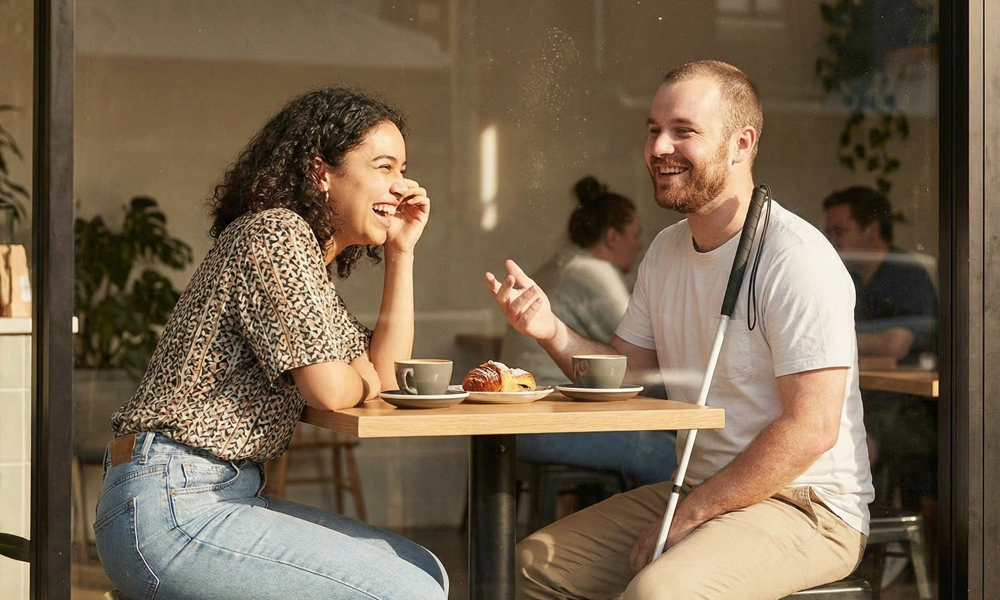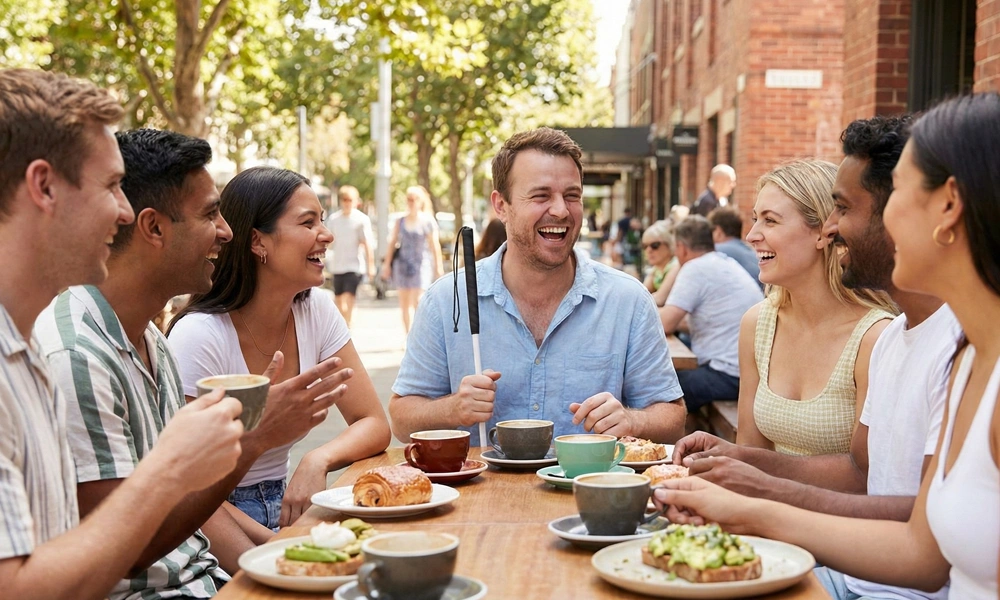
There’s a common misconception that vision impairment means withdrawing from social life. Nothing could be further from the truth. Yes, navigating cafés, concerts, beaches, and social gatherings requires some extra thought and strategy, but the richness of connection, experience, and community is absolutely within reach. Australian social culture – from weekend barbies to beachside meetups – can be fully enjoyed with the right approaches and a bit of confidence.
This guide explores practical strategies for participating fully in Australian social life while managing vision impairment.
The Social Confidence Mindset
Before diving into specific situations, let’s address the elephant in the room: many vision-impaired people worry about being a burden or making social situations awkward. This mindset is understandable but ultimately unhelpful.
The reality? Most Australians are willing to help – they just don’t always know how. Your confidence in communicating your needs sets the tone for every social interaction. When you’re matter-of-fact about your vision impairment, others typically follow your lead.
Think of it this way: you’re not asking for special treatment, you’re simply letting people know how to include you effectively. That’s not a burden – it’s good communication.
Communicating Your Needs
Clear, direct communication is your most valuable social tool. Vague hints or hoping people will “just figure it out” rarely works well.
The Introduction
When meeting new people, decide how and when to mention your vision impairment based on context. In some situations, it’s immediately relevant: “Hi, I’m Sarah, and I’m vision-impaired, so I might not recognise you if we meet again – please introduce yourself.” In other contexts, you might mention it naturally as it becomes relevant.
There’s no single “right way” to disclose. Some people prefer being upfront immediately, while others mention it only when necessary. Both approaches are valid – do what feels comfortable for you.
Specific Requests
Replace “I can’t see well” with specific, actionable information:
- “I need you to verbally tell me where the chairs are”
- “Can you describe who else is here?”
- “Please say my name before you start speaking to me”
- “I’ll need your arm to navigate to the table”
Specific requests get specific results. People genuinely want to help but often don’t know what’s useful.
Setting Boundaries
You’re not obligated to accept every offer of help. If someone’s “assistance” actually makes things harder, politely redirect: “Thanks, but I’ve got this” or “Actually, if you could just describe where the door is, I can navigate there myself.”
It’s also fine to decline social invitations when you need rest or simply don’t feel like navigating challenges that day. Protecting your energy is self-care, not antisocial behaviour.
Dining Out
Australian café and restaurant culture is central to social life. Fortunately, most venues are accommodating once they understand your needs.
Choosing Venues
When friends suggest meeting up, don’t hesitate to express preferences based on accessibility. Well-lit venues with clear layouts are easier to navigate. Quieter restaurants aid conversation when you’re relying on verbal cues to know who’s speaking.
Outdoor dining can be lovely but presents challenges with uneven surfaces and changing light. If you’re keen on alfresco dining, arrive before sunset when possible, and use your cane or companion’s arm to navigate.
Arriving and Seating
When you arrive, let staff know you’re vision-impaired. Most will happily guide you to your table and describe obstacles along the way. If they grab your arm without asking, gently redirect: “Thanks, I’d prefer to take your arm” – this gives you more control.
Request seating that works for you. A table near good lighting helps with reading menus or seeing your plate. Avoid spots directly under harsh downlights (glare) or in dark corners. Window seats provide natural light but can create backlighting issues, making companions’ faces hard to see.
Menus and Ordering
Many venues now have online menus you can access on your phone with screen readers or magnification apps. Call ahead and ask if they have a digital menu or large print options.
If not, it’s completely acceptable to ask staff or companions to read the menu aloud. Frame it practically: “Could you tell me what pasta dishes you have?” rather than reading the entire menu from start to finish.
Be specific with questions about dishes: “Does the salad come on a plate or in a bowl?” “Are there any ingredients I might not expect?” This prevents surprises and helps you eat confidently.
Navigating the Meal
The “clock method” helps locate food on your plate: “Your steak is at 6 o’clock, vegetables at 3 o’clock, potatoes at 9 o’clock.” This simple system works brilliantly once everyone knows it.
Don’t stress about perfect table manners. Occasional spills or missed forkfuls happen to everyone. Good friends don’t care, and strangers have their own things to worry about.
If you need to leave the table for the bathroom, ask for verbal directions or accept a companion’s offer to guide you. There’s zero shame in either approach.
Cafés and Coffee Culture
Australians take their coffee seriously, and cafés serve as informal meeting spaces and workspaces. Navigating busy cafés requires different strategies than restaurants.
Ordering at the Counter
Many cafés require ordering at the counter rather than table service. If the counter layout isn’t clear, ask staff: “Where should I stand to order?” They’ll direct you to the right spot.
When ordering, be clear about your payment method if you need assistance: “I’m paying by card and I’m vision-impaired – could you position the EFTPOS terminal for me?” Most terminals now have audio options for PIN entry, but not all venues know how to activate them.
Finding Seating
In busy cafés, locating an empty table can be tricky. Don’t hesitate to ask staff or other patrons: “Excuse me, are there any free tables?” People are generally helpful, especially when they understand why you’re asking.
Once seated, orient yourself to your surroundings. Where’s the bathroom? Where’s the exit? Where are other people seated? This mental map helps you move confidently.
Sugar, Milk, and Condiments
Communal condiment stations present challenges. It’s perfectly fine to ask someone nearby: “Could you please pass the sugar?” or “Which one is the skim milk?” Most people respond positively to simple, direct requests.
Some cafés now offer assistance cards that indicate you may need help. While not widespread in Australia yet, Vision Australia can provide information about these emerging tools.
Social Gatherings and Parties
Parties, barbecues, and casual get-togethers are staples of Australian social life. With some preparation, you can fully participate.
Arriving at New Venues
Whether it’s a house party or a community event, arriving at an unfamiliar venue requires orientation. If possible, arrive with a friend who can describe the layout: “The kitchen is straight ahead, bathroom down the hall on the left, backyard through the sliding door.”
Alternatively, ask the host for a quick tour when you arrive. Most hosts are happy to show you around, especially if you explain it helps you move independently throughout the event.
Navigating Crowds
Crowded parties are challenging for everyone but particularly tricky when vision-impaired. White canes help people give you space, but in dense crowds, you might prefer using a companion’s arm.
Find a comfortable spot to settle – perhaps near a wall or in a corner – where you can engage in conversation without constantly navigating bodies. There’s nothing wrong with being strategically stationary at parties.
Food and Drinks
Buffets and shared food situations require strategy. Ask someone to describe what’s available and where items are located. It’s completely acceptable to request someone help you fill a plate, or to take just a few items you can confidently identify.
For drinks, stick to cups or glasses you can easily distinguish. Avoid the common punch bowl unless you’re confident about pouring independently. There’s wisdom in knowing your limits and choosing accordingly.
Conversations in Groups
Group conversations can be disorienting when you can’t see who’s speaking. A few strategies help:
Ask people to say their names before speaking: “Hi everyone, before we start, could people say their names when they talk? It helps me follow the conversation.”
Position yourself strategically. Sitting or standing with your back to a wall means voices come from one direction rather than surrounding you.
Don’t fake understanding. If you miss part of a conversation, it’s better to say “Sorry, who just said that?” than to pretend you’re following along.
The Great Australian Beach Culture
Beach culture is deeply woven into Australian identity. Vision impairment doesn’t exclude you from surf, sand, and coastal socialising.
Getting to the Beach
Many Australian beaches have accessibility features you might not know about. Beach matting creates stable pathways across sand, and beach wheelchairs are available at numerous locations. Contact local councils or Accessible Beaches Australia for information about specific beaches.
If you’re meeting friends at the beach, establish a specific meeting point with clear landmarks: “Meet at the flags, northern end” or “At the surf club building entrance.” “Near the water” is too vague in a busy beach environment.
Navigating Sand and Surf
Walking on sand is unpredictable – slopes change, holes appear, and obstacles hide. Use a companion’s arm for stability, or use your cane to detect obstacles ahead.
For swimming, stay between the flags and inform lifeguards about your vision impairment. They’ll keep extra watch. Swim with a buddy who can provide verbal directions if you become disoriented.
Be realistic about conditions. Rough surf, strong currents, or crowded beaches might not be worth the stress on some days. There’s no shame in enjoying the beach from shore with feet in the sand and a good conversation.
Beach Picnics and BBQs
Beach barbecues are quintessentially Australian. When attending, let friends know you’d appreciate help with setup and food navigation. Most people are happy to describe where food is and help you avoid hot surfaces.
Bring your own clearly identifiable drink bottle or cup – easier than trying to distinguish between identical water bottles in the sand.
Events, Concerts, and Sports
Live events are absolutely accessible with planning and communication.
Purchasing Tickets
When booking tickets, contact the venue’s accessibility services. Most Australian venues have dedicated accessibility coordinators who can arrange appropriate seating, assistance to your seat, and other accommodations.
Companion cards are available for eligible vision-impaired Australians, providing free entry for a support person at participating venues. More information is available through Companion Card Australia.
Arriving at Venues
Arrive early to avoid peak crowds and give yourself time to orient. Many venues offer priority entry for people with disabilities – don’t be shy about using these services.
Request an escort to your seat. Venue staff are trained to provide this assistance, describing steps, rows, and potential obstacles along the way.
Enjoying the Experience
Audio description services are increasingly available at Australian theatres, cinemas, and some sporting events. These provide narrated descriptions of visual action. Ask when booking tickets whether this service is available.
For concerts and sports, the atmosphere and sound are often more important than visual details anyway. Focus on what you can enjoy rather than what you’re missing.
Building and Maintaining Friendships
Vision impairment can feel isolating, but meaningful friendships are absolutely possible with effort from both sides.
Finding Your People
Join groups based on interests, not just disability. Whether it’s book clubs, crafting groups, sports teams, or political organisations, shared interests create natural connections.
That said, peer support groups specifically for vision-impaired people provide unique value. Others truly understand your experiences in ways sighted friends might not. Vision Australia runs various social groups across the country.
Online communities also matter. Facebook groups for vision-impaired Australians offer 24/7 connection, advice, and solidarity.
Being a Good Friend
Friendship is reciprocal. While friends should accommodate your accessibility needs, you also contribute value to their lives. Share your time, skills, emotional support, and unique perspectives.
Don’t let vision impairment become your only topic of conversation (unless you’re in a support group specifically for that). You’re a complete person with diverse interests, opinions, and experiences.
Accepting Help Graciously
Friends will offer help sometimes. Accept graciously when you need it, decline politely when you don’t. Both responses maintain healthy boundaries.
It’s also okay to educate friends about helpful versus unhelpful assistance. Real friends appreciate learning how to support you effectively.
Handling Awkward Moments
Despite your best efforts, awkward social moments happen. Someone grabs you without asking, speaks to your companion instead of you, or makes assumptions about your capabilities.
Responding to Unhelpful “Help”
When someone assists in ways that don’t help, redirect kindly but clearly: “I appreciate you trying to help, but I’d prefer to…” Most people respond positively to gentle correction.
For persistent over-helpers, be more direct: “I’ve got this, thanks.” You’re not being rude – you’re setting necessary boundaries.
Addressing Patronising Behaviour
If someone speaks to you like a child or talks about you to others as if you’re not there, address it directly: “Please speak to me directly, not through my friend” or “I can understand you fine – there’s no need to simplify.”
Your calm confidence usually shifts the dynamic. If not, you’ve tried, and their awkwardness is their problem, not yours.
When Things Go Wrong
You’ll spill drinks, walk into furniture, or miss social cues occasionally. When this happens, handle it with humour and grace: “Oops, that’s what I get for not paying attention!” Most people relate to being clumsy and will laugh with you, not at you.
Moving Forward
Social confidence with vision impairment isn’t about being perfect – it’s about being present. You’ll have great days when everything flows smoothly and challenging days when nothing feels easy. Both are part of the experience.
The more you engage socially, the more confident you become. Each café visit, each party, each beach outing teaches you something new about navigating social spaces. Your strategies will evolve as you learn what works for you.
Remember, you belong in social spaces just as much as anyone else. Vision impairment doesn’t diminish your right to friendship, community, and connection. It simply means you navigate these experiences somewhat differently – and that’s completely fine.
Australia’s disability discrimination laws support your right to access public spaces and social venues. When barriers arise, you can advocate for change while also finding practical ways to participate in the meantime.
Your social life is yours to create. Be patient with yourself, communicate clearly, and engage fully. The connections you build and experiences you create are worth every challenge along the way.